
At the grave of his fallen master, a squire picks up his knight’s longsword. He holds it with determination in his eyes, realizing that he, too, can go forth as a knight. The camera pans, the oh-so-familiar “Game of Thrones” score begins to swell and the music ends as the camera smash cuts to our protagonist going to the bathroom.
The newest installment of George R. R. Martin’s television franchise is the smallest scale that the IP has ever taken, adapting his novellas of the Tales of Dunk and Egg about a peasant-born hedge knight and his squire as they travel through Westeros. The first season, which concluded on Sunday, adapted the first of three novellas, “The Hedge Knight.”
If you loved “Game of Thrones” and “House of the Dragon” for their expansive worlds, magical settings and larger-than-life stories, this show probably isn’t for you. But if you come into the story accepting that no grand battles will be fought, and that no dragons will soar through the air, you just might find that this is still a masterpiece of a show.
If nothing else, this is the most real, gritty and down-to-earth production that HBO has taken on with the “A Song of Ice and Fire” property, with simple, 30-minute episodes depicting a knight wrestling with honor, duty and sacrifice as he attempts to navigate a medieval tournament and ends up embroiled in the politics of the high lords.
The star attraction of this show is undoubtedly the acting chops of its main cast. Peter Claffey, the 6-foot-5 rugby player turned actor, is phenomenal as the large, simple and naive Dunk, or later, Ser Duncan the Tall.
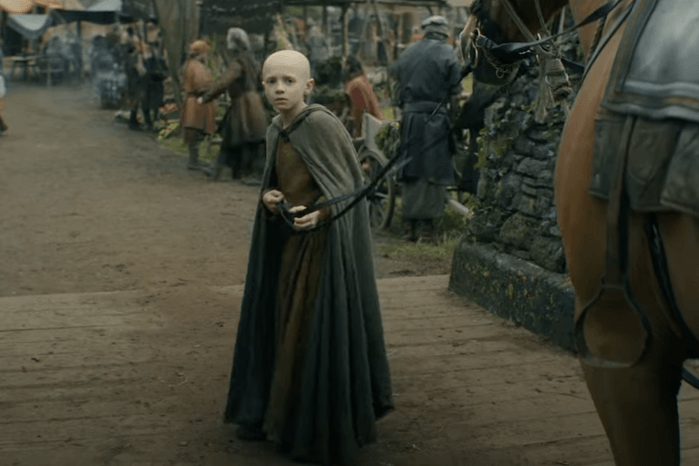
Likewise, Dexter Sol Ansell perfectly nails the wiser-than-his-years, politically savvy Egg, revealed later as Aegon IV Targaryen of the royal family. The chemistry between these two is unmatched, the unaware and honest Dunk learning about this new world of lord and ladies from Egg, who in turn learns the values of knighthood as a squire.
This show does not promise action and political intrigue like “Game of Thrones.” Nor does it promise clashes of mighty armies and great CGI beasts tearing at each other like “House of the Dragon.” Instead, “A Knight of the Seven Kingdoms” is a story of two people making their way through an imperfect world with only each other to help them, and the budding friendship that develops as a result.
As I said, if you want a big-scale story, you’ve come to the wrong place with this new series. But make no mistake, what “A Knight of the Seven Kingdoms” lacks in scale, it more than makes up for in earnestness, heart and the genuine relationships that it develops. I, for one, am eagerly awaiting the second season and hope that the show continues with this profoundly human story.