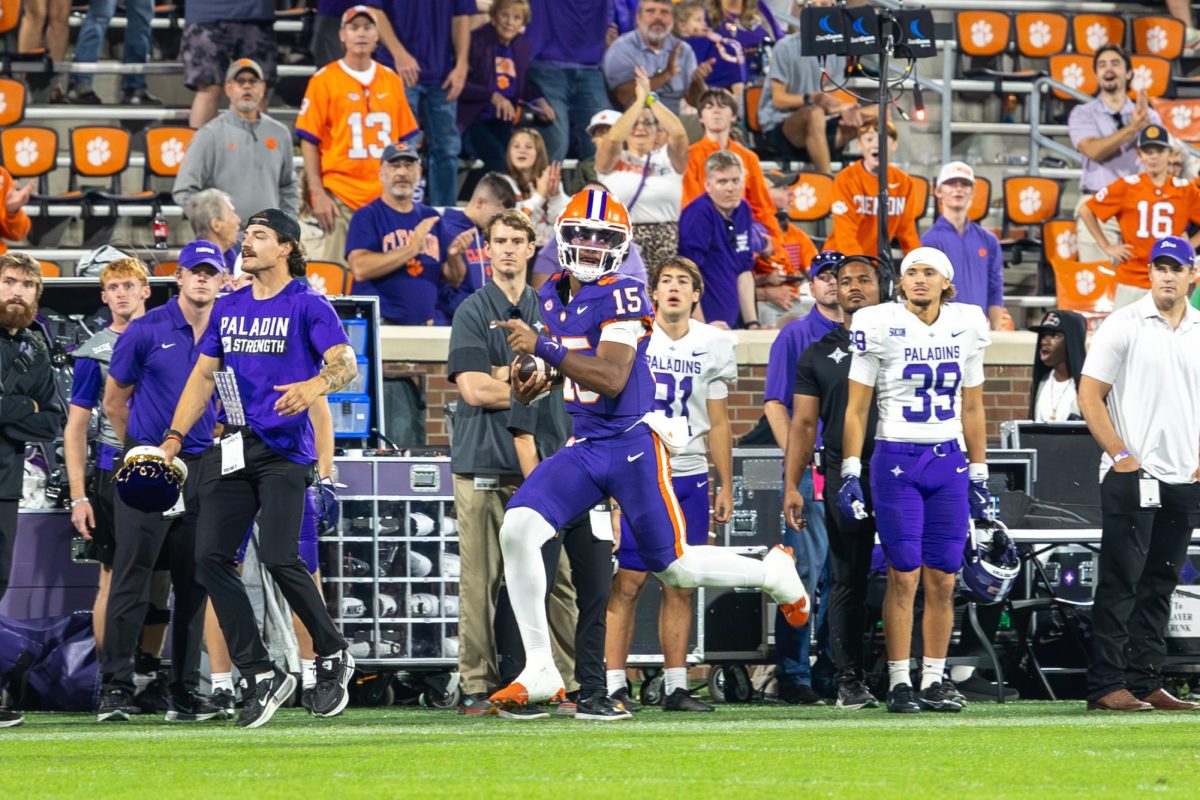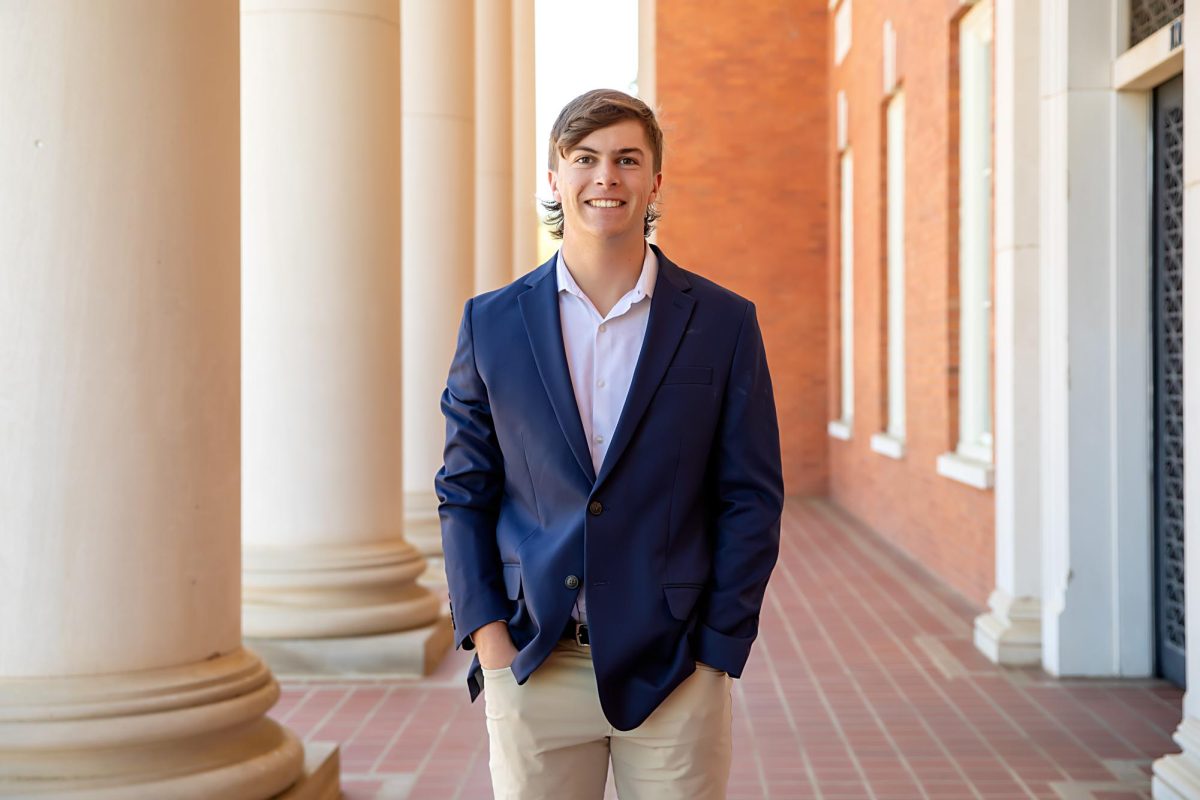

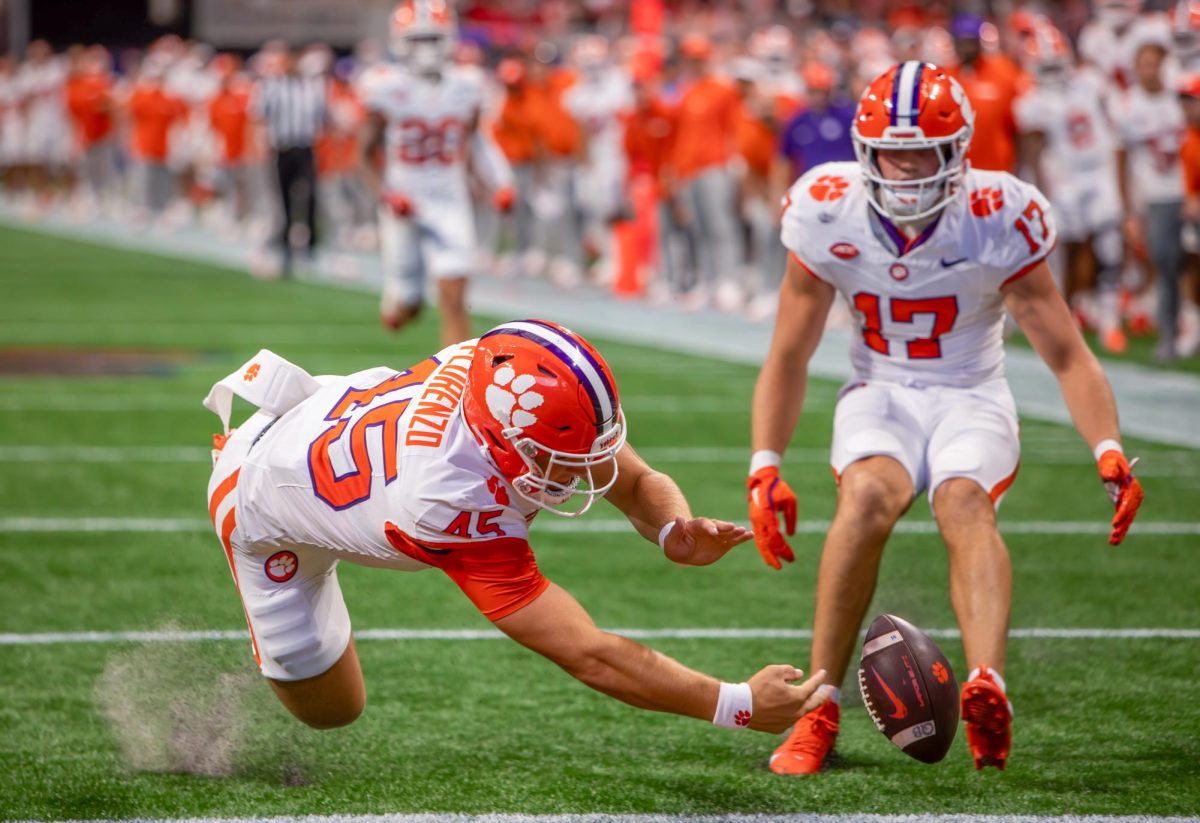
Philip Florenzo remembers the first time that someone told him he was good enough to long snap in college.
His reaction wasn’t disbelief so much as dismissal. A “come on now, I’m better than that” kind of feeling.
Long snapping wasn’t a future. It wasn’t even something he took seriously. It was just the side gig he picked up in high school to get out of football conditioning.
He was a Maryland kid who figured he’d play lacrosse somewhere. That path made sense. He was athletic, competitive and smart. The long snapping — really, football as a whole — was just extra.
Then came the moment that quietly changed everything.
Mike Solwold, an NFL veteran with a Super Bowl ring and the type of credibility you don’t argue with, watched Florenzo snap and didn’t hesitate.
“You’re pretty good at this long snapping thing,” he told him. Florenzo shrugged it off.
And then Solwold hit him with a line that sold it all.
“I won a Super Bowl being a long snapper, and you’re better than I was,” Solwold said.
Florenzo didn’t know what to do with that. But it was the first spark — the first time the idea of long snapping being something bigger than a quirky high school skill started to make sense.
Still, Clemson? That wasn’t supposed to be real.
Even when he began taking long snapping seriously, nothing about his path looked like a future Tiger.
There were no recruiters calling. No offers. No whispers of a late scholarship. He was just a kid who could snap well, trying to figure out where sports fit into his life.
So he did what all regular students do: he went on college tours. Lots of them.
South Carolina. Tennessee. A stretch of big Southern universities with big atmospheres. Clemson was in the mix, but the real reason he came back for a second visit was totally unplanned.
He and his dad were literally driving past campus on their way to another school. They stopped, walked around again, and this time something clicked.
“I just felt the energy of the place,” Florenzo said. “It was a random spring and people just looked happy here.”
He applied, got in and became a regular student. But he didn’t stop chasing something bigger.
Trying to walk on at Clemson might be one of the toughest paths in college sports.
But Florenzo emailed, emailed and emailed again with no response. No acknowledgement, no invite, no indication anyone was reading the messages he sent.
“They lock this place up like Fort Knox,” Florenzo said. “They don’t want anybody to join it seems like.”
He was pitching himself into a void.
Then, a random alumni event back home changed everything.
Florenzo was waiting tables that night at a Loyola Blakefield function when he started talking to Class of 1959’s Rudy Russo, who had more connections inside Clemson than Florenzo realized.
Russo learned he could long snap and asked if he was trying to walk on. At that point, Florenzo almost didn’t want to admit it.
“You don’t tell people you’re trying to walk on at Clemson,” he said. “You feel like a weirdo if you’re like, ‘Hey, by the way, I’m going to walk on to the most premier program in college football.’”
But he was honest with Russo — honest about trying for more than a year, honest about getting nowhere, honest about how locked down the place felt.
And Russo believed in him.
He sent a letter to Clemson President Jim Clements explaining Florenzo’s story. And suddenly, after months of silence, Florenzo had a tryout lined up that same night.
No back channels, no secret introductions — just a chance. And that’s all he ever wanted.
What happened next wasn’t supposed to happen.
Most walk-ons get evaluated, go see compliance, and if they’re lucky, get folded into the scout team later.
Instead, after watching him snap, Dabo Swinney met him on the practice field, shook his hand and told him he made the team. Right then and there.
Florenzo remembers the shock more than anything. He’d never poured himself so completely into something, never risked that level of disappointment.
And suddenly the thing he’d chased quietly for years, the thing he didn’t even want to tell people about, became real in a moment he couldn’t have scripted.
That’s just a fraction of the story, though.
People on the outside think long snapping is easy. Florenzo learned quickly that it isn’t.
He admits that he walked in with a little arrogance.
“When I was starting, I just threw the ball as hard as I could back there,” Florenzo said. “(The holder) is going to catch it and put it down. If the kicker complains, he’s a prima donna.”
Clemson taught him why that mindset gets specialists cut.
“It wasn’t until I started playing here and they’re like, ‘Hey, the laces aren’t good,’” he said. “I was like, ‘What do you mean? Caught the ball. Ball down. It’s good.’”
It wasn’t that simple.
“They explained to me that you have to get the laces to fully turn by the time he catches it,” Florenzo said. “I’ve learned the nuances — the rotation, the mental side, everything it takes.”
The laces. The rotation. The exact spin. The timing between snap, hold and kick. The responsibility of delivering a ball to a patch of turf the size of a playing card while tens of thousands of fans hold their breath.
It didn’t intimidate him. It fascinated him.
He became obsessive about the details, about the rhythm, about the idea that the best long snappers are the ones no one has to Google.
“I hope I go unnoticed,” Florenzo said.
It’s the most long-snapper quote ever, and he means it.
Inside Clemson, the appreciation is obvious. Coaches see it, teammates see it, Swinney sees it and even the analysts who study specialists for the next level see it.
Swinney doesn’t sugarcoat it.
“If somebody would give him a shot (in the NFL), he could do it. He can run. He can tackle. I know there are only 32 of those jobs, so the odds are stacked against him,” Swinney said.
And yet, Florenzo has a real chance to play professionally.
That doesn’t guarantee anything; he knows that better than anyone. At the time, he had two regular-season games left. Now all that remains is one bowl game.
“These next two games could be my last games of my career,” he said prior to senior night against Furman. “And I’m okay with that because I believe I gave everything I had to Clemson and I have no regrets.”
But if it isn’t the end?
“Then I won’t take it for granted,” he says. “I won’t be entitled to play football — you get to play football.”
For someone who once dismissed the idea of long snapping in college, the fact that an NFL opportunity is even on the table feels almost poetic.
But then again, nothing about his story was supposed to happen.
Which is exactly why he’s never counted himself out.