

Clemson University’s National Association for the Advancement of Colored People chapter held a press conference on Monday in remembrance of 10 years since the Sikes Hall sit-in.
NAACP leadership also raised questions about the University’s commitment to the Harvey and Lucinda Gantt Multicultural Center.
The organization met at Sikes Hall to remember the students who protested for nine days in April 2016 after “bananas were found hanging from an African American’s Fort Hill banner on campus,” according to Clemson NAACP’s social media.
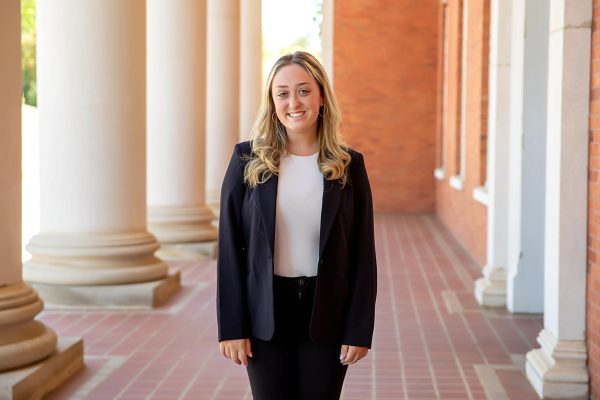
Lela Rush, chapter president, began the press conference by honoring the “courage, resilience and unity” of the students during the sit-in.
She explained that after two days of the sit-in, five students, Ian Anderson, A.D. Carson, Khayla Williams, Rae-Neesha White and D.J. Smith, were arrested for their “devotion to defending Black students’ right to have the No. 1 Clemson experience.”
Rush also noted seven demands created by the students who camped on the steps of Sikes.
Back in 2016, the students called for immediate action, such as a public statement from former University President Jim Clements, the renaming of buildings with offensive names, diversity training for faculty and administrators and the establishment of a new multicultural center to serve as a “safe space for students from underrepresented groups.”
They also requested more funding for organizations serving minority groups. The students demanded an increase in the percentage of “people of color in faculty and administration,” as well as adding diversity as a University core value. Of these demands, Rush explained that Clements’ highest priority was to create a multicultural center, which became the Gantt Center.
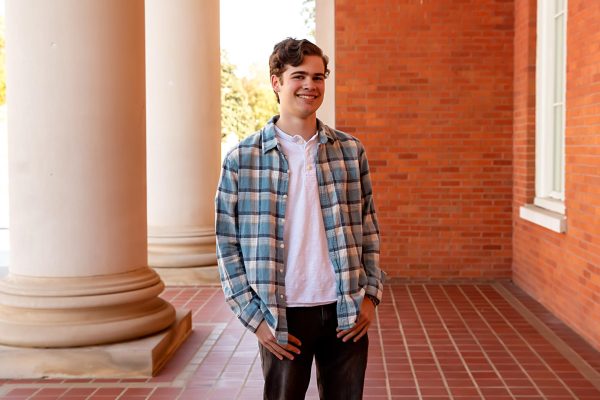
Dasia Goldsmith, chapter vice president, then took to the podium to speak about free speech around campus.
“While the University spoke about free speech and respect in its response, those values have not been applied equally to today,” Goldsmith continued. “Time and time again, harmful incidents … have been defended under the concept of freedom of expression, while the voices and experiences of marginalized students have been overlooked.”
She then revisited specific events that have occurred on campus in recent years, including the bake sale in 2023 labeled the “Affirmative Action Bake Sale,” the minimization of the “reality of police brutality faced by Black Americans” and, most recently, the dismissal of three faculty members following political activist Charlie Kirk’s fatal shooting on a Utah college campus in September 2025.
Goldsmith noted that the administration responded quickly to the incident involving the professors and asked the audience, “Why is it that some moments received an immediate acknowledgment while others were ignored?”
She continued by explaining that this was “selective advocacy” and a pattern in the University’s commitment.
Goldsmith also noted that the Gantt Center, although it was formally a top priority, has never received a permanent location and is now facing the “possibility of losing its identity entirely through a merger” with the Center for Student Leadership and Engagement.
Additionally, the center’s newsletters are no longer available, according to a post on Clemson NAACP’s social media.
Goldsmith explained that there have been ongoing changes to programs that the Clemson NAACP believes promote safe spaces for minority groups.
“Communication cannot only exist when initiatives are created. It must also exist when they are being altered or taken away,” Goldsmith said, noting that the changes to the Gantt Center are a situation in which the University has failed.
Next, Goldsmith addressed what the University should do moving forward. The organization believes that the University should “promote free speech while also holding its community accountable for respect and dignity.”
Clemson NAACP urges the University to “pause any changes” to the Gantt Center until a committee composed of students, staff, faculty and administrators is formed to develop a plan that reflects all the needs of the community, according to Goldsmith.
Lastly, Clemson’s NAACP wants the University to stay in constant communication with leaders within underrepresented communities.
“These students should not be the last to know about the decisions that directly impact them,” Goldsmith concluded.