
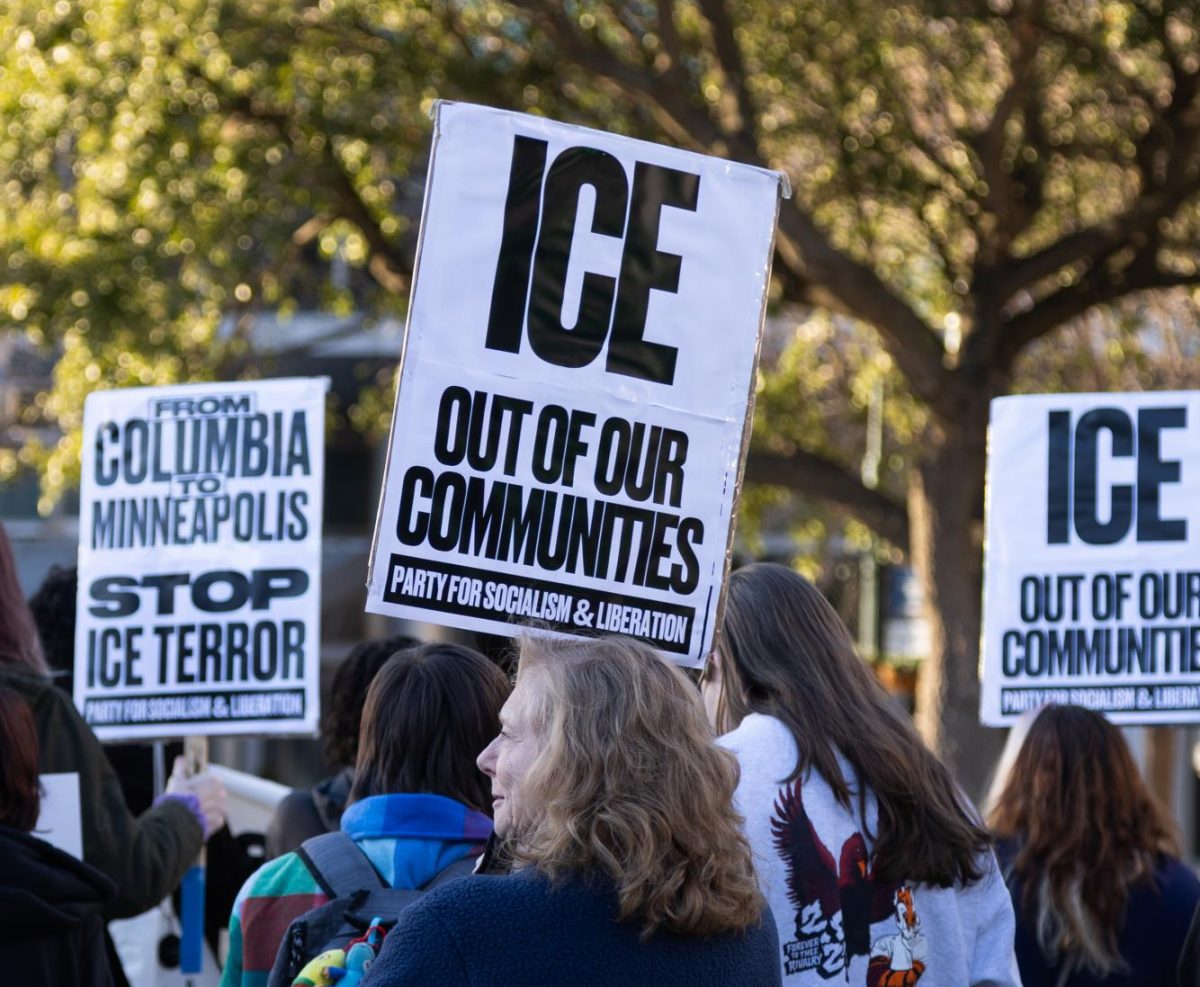
As you may have seen or heard on Jan. 8, in Columbia, South Carolina, hundreds of community members gathered at the State House to protest actions by U.S. Immigration and Customs Enforcement, particularly in response to recent federal enforcement tactics and a fatal shooting involving an ICE agent in Minneapolis, Minnesota. Organizers and demonstrators were calling for accountability, justice and an end to what they described as excessive force by federal agents.
The rally drew students, activists and community members united under chants like “stop ICE terror” and “justice for all,” highlighting how grassroots protest remains a powerful form of civic engagement.
In addition, on Jan. 20, there was a nationwide walkout on the anniversary of President Donald Trump’s second term inauguration, dubbed the Free America Walkout. During this time, a large protest once more took place in Columbia, South Carolina, where students and community members alike took a stand against something that they deemed unconstitutional.
Critics of protest often ask: “Do demonstrations really change anything? What are they achieving other than being in my way?” Social science suggests that protesters really are making a change. Research shows that protests work through three key mechanisms: they signal widespread concern about an issue, increase public awareness and put actual pressure on power holders to respond. It’s not purely about forcing policymakers to make a difference; educating the public is also a main goal. When large numbers of people gather, media coverage grows, more citizens learn about the issue and policymakers face increased political and social costs if they ignore public demands.
Historically, public demonstrations have driven major shifts in U.S. life, from civil rights and labor movements to anti-war actions and environmental campaigns. They’ve been prevalent throughout history. Even when outcomes aren’t instantly visible in law or policy, protests build community, strengthen coalitions across diverse groups and shape long-term public opinion. For young people especially, taking to the streets alongside classmates and neighbors is an act of empowerment and political education.
Many younger generations think that just because they’re too young to vote, they can’t make a difference, but this isn’t true. For younger generations, advocacy today isn’t limited to marches alone. Smart activism combines street actions with digital organizing, lobbying, voting campaigns and coalition-building across communities. By amplifying voices both online and offline, young advocates connect local struggles, like those in Columbia, to broader national debates about immigration, civil rights and accountability.
Change doesn’t happen overnight. But every protest, from a State House rally to a campus walkout, contributes to a larger story of civic engagement. Showing up, speaking out and holding power to account is not just symbolic; it’s a tangible force in shaping policy and culture for the better. Advocate for what you believe is right.
Lauren Douda is a sophomore English and secondary education major from Lexington, South Carolina. Lauren can be reached at [email protected].