
The most confident player of the 2022 FIFA World Cup was Bruno Petković. Not one of the several household names, Golden Boot or Ballon D’Or winners, but the humble, rotational striker for third place Croatia. At least that’s what Lucas Carrasquilla Parra would argue.
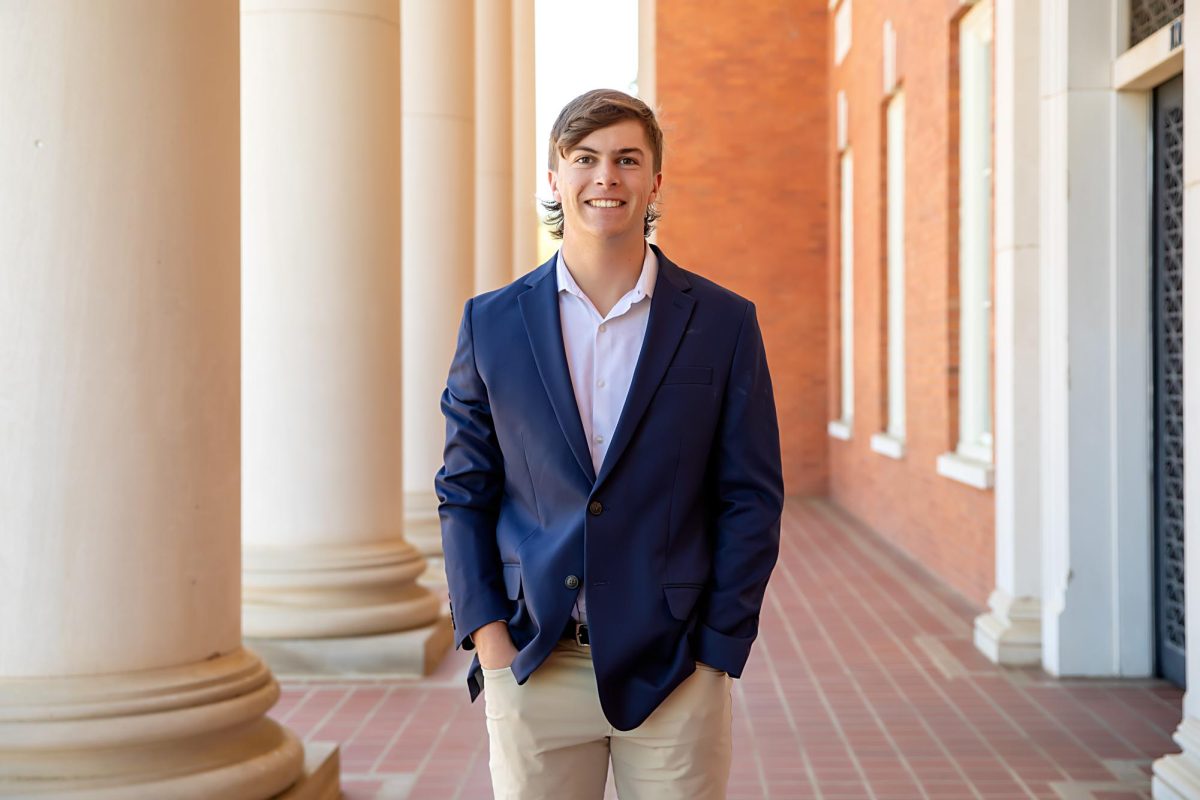
Parra is an undergraduate student and research assistant at Universidad del Rosario in Bogotá, Colombia, pursuing a double major in applied mathematics and computer science as well as economics.
Earlier this month, he shared a preprint to his academic article titled Quantifying Opportunity-Adjusted Risk Taking In Football Pass Selection. Parra promoted and explained the premise of his paper on TikTok, where the post amassed just under 500,000 views, 72,000 likes and hundreds of positive comments reacting to his findings.
While the student’s Gen Z approach in academia was interesting enough, the content of his article left football fans marveled.
It is often discussed that some players are more creative than others. Kevin De Bruyne and Lionel Messi are praised for their superb vision to play passes that are seemingly impossible, in order to generate more threatening attacking opportunities. However, passes like these come with an increased risk of failure and turning over possession. The purpose of Parra’s research is to quantify passing risk preferences, labeling soccer’s newest statistic “Opportunity-Adjusted Risk Taking” (OART).
Parra uses StatsBomb 360 freeze-frame data for the 2022 FIFA World Cup to analyze 56,415 passing events, comprising 608 players. For each event, all the same-team players, excluding the passer, that are visible in the freeze-frame are counted to form an option set of receivers.
With the option set defined, a machine learning model predicts the pass completion probability of each potential pass. The model uses spatial, tactical and situational contextual features from the freeze-frame to achieve this. Distance to goal end, pass distance and pass angle were weighted as the three most important features in predicting pass success, respectively.
Once all this data is collected, Parra can use a mathematical formula he created to calculate the OART score for an event. The metric is a value between zero and one, that compares the selected pass to the available alternatives with a higher predicted success rate. Zero would mean that the selected pass was the safest option, and a score of one would mean that every alternative had a higher predicted success probability.
As for the case of Petković, the striker led the World Cup with an OART score of 0.77, meaning that he regularly played passes where 77% of his alternatives were safer options.
While the article does discuss several limitations that require further development to refine this model, the study provides a grand contribution to football research. Parra bridges a gap in research that highlights the decision-making process of a player’s passing habits, rather than their sole completion statistics. The methodological process proves to be robust and reliable, with the article stating that it establishes a framework which could be applicable beyond football contexts.
As for the football applications, OART can become a powerful tool in evaluating the sport at a high level, especially as analytics continues to grow in importance. At the college and professional level, where statistics are meticulously tracked, this metric can support recruitment evaluation, tactical analysis and player development assessment.
For instance, while Parra acknowledges that the relationship between risk preference and outcomes is very complex, his research finds a positive association between OART and possession-level expected goals creation. This suggests that “risk-taking behavior may contribute to value generation in attacking contexts.”
With the fluidity of the transfer portal, the college landscape looks more like the professional level than ever before. OART can help coaches and scouts quantitatively profile players’ decision-making to find the best fit for their program and play style.