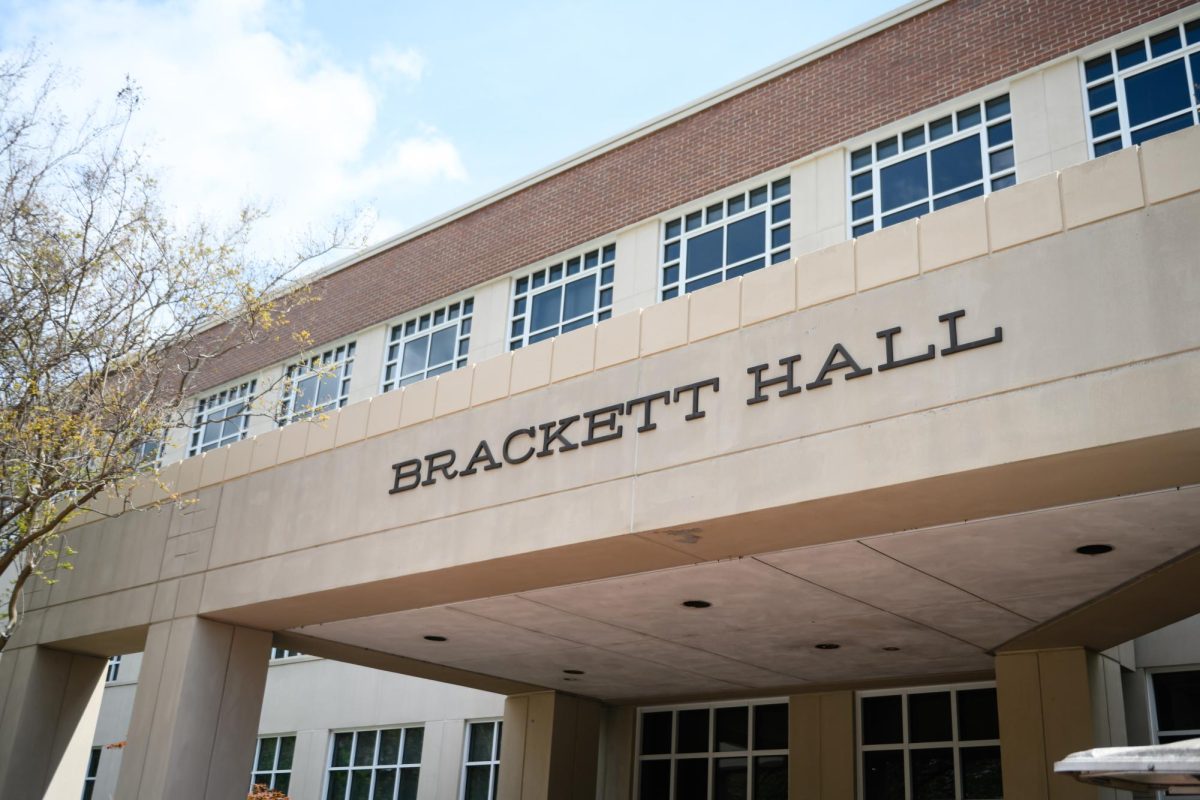


On March 31, the Clemson University Anthropology Department assisted the Anderson County Sheriff’s Office in recovering human remains in Anderson.
The ACSO launched an investigation after two children “found what looked like a human skull while playing in a creek” in Anderson on March 29, according to the Anderson County Office of the Coroner.
Later investigations recovered “more bones, including teeth,” which will all be sent to labs for DNA analysis.
Investigators believe the bones have been there for a long period of time, according to Greg Shore, Anderson County coroner.
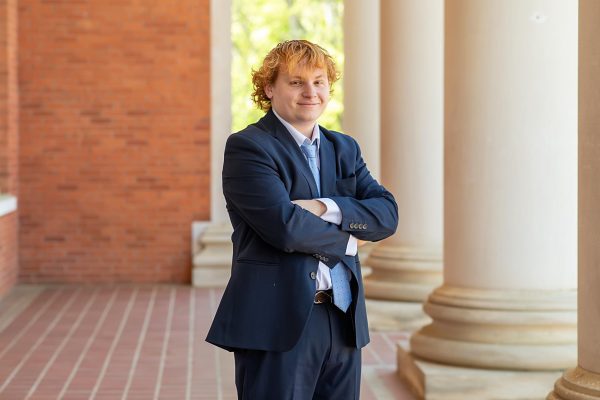
Adrian Shearer, a senior anthropology major, spoke with The Tiger about her experience working at the site. She, along with two other students, was invited to the scene by Dr. Katherine Weisensee, department chair for anthropology at Clemson.
“She thought it would be a good opportunity for us to get out in the field,” Shearer told The Tiger.
Shearer was surprised by the scope of the investigation. While she expected it to be small-scale, “it was actually pretty interdepartmental — the coroner’s office, forensics department, law enforcement, just a lot of different departments getting together,” Shearer said.
She explained that the assembled departments “really stood back and let us work,” and how impressive it was that the agencies on scene would consult Dr. Weisensee on the investigation.
“They really defer to her as the expert,” Shearer continued, referring to the recognition as “cool on a professional level.”
Sutton Walters, another senior anthropology student, also spoke with The Tiger on the experience. She said it felt very official.
“I had never done this before, I’m really grateful that (Dr. Weisensee) let me be a part of the experience,” Walters said.
Walters then discussed the processes she and her fellow students used to identify the body, including examining bone fragments and teeth for distinguishing characteristics, such as a recovered tooth with a dental filling.
“We had part of the skull, and there’s certain features of the skeleton you can look at to try to decipher age, sex, stature, that kind of thing,” Walters explained.
Walters concluded with remarks on Dr. Weisensee’s contributions to the field as a whole and on her research to more accurately determine time since death.
She explained that this part is crucial because “that’s always the question that everyone asks right when they get to the scene: how long has this person been dead?”
The next step in the investigation is to await the results of the DNA analysis, which could take months to years, according to the ACOC.