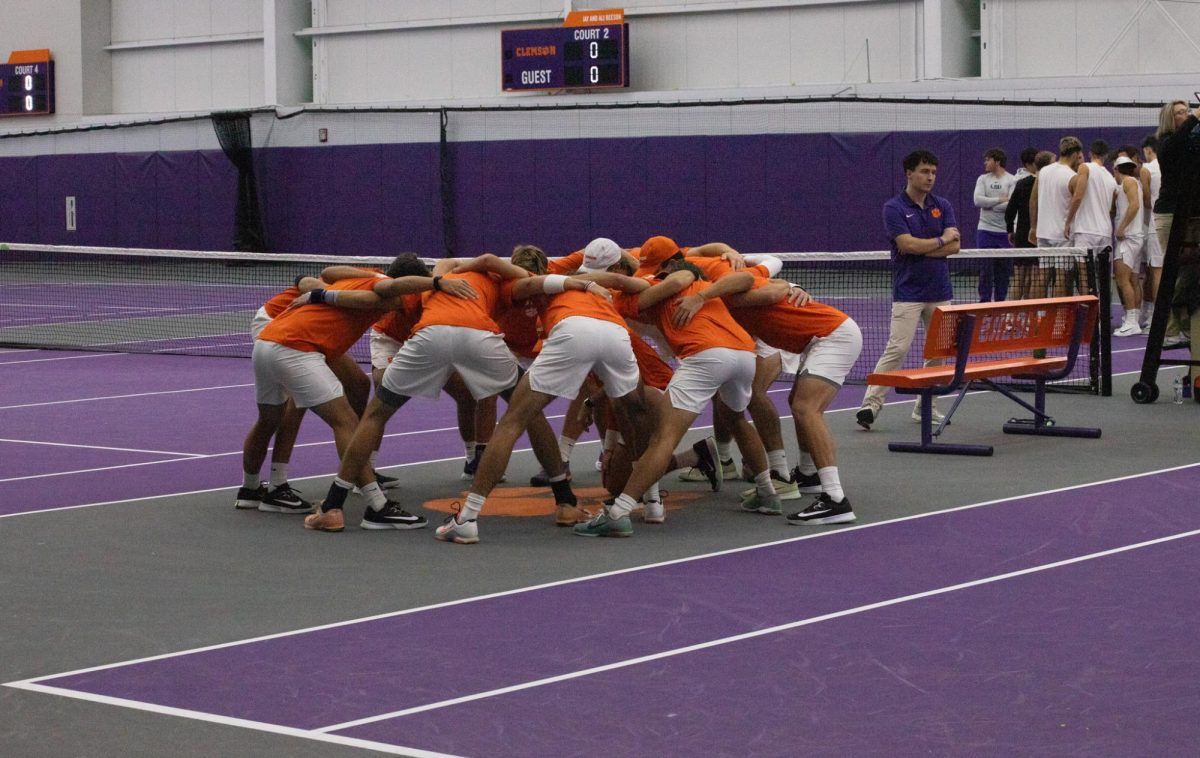

On Feb. 15, 2025, No. 2 Wake Forest men’s tennis beat No. 19 NC State 4-2 in the quarterfinals of the ITA Men’s National Team Indoor Championship in Dallas, Texas.
In the win, Wake Forest’s Stefan Dostanic defeated Braden Shick, but not without drama. After losing the first set, Shick was serving down 3-6 in a 7-point tie break, facing three match points. Shick’s serve clipped the top of the net cord and jumped 15 feet in the air, landing in the service box. For Dostanic, it was a sitting duck. He easily smashed the ball, ending the match.
But in the world of professional tennis, that point would have looked very different.
On the ATP Tour, serves that clip the net and land in the service box are deemed a let, and the server re-serves. But at the collegiate level, it’s play on.
That is just one of the multiple strange differences between collegiate and professional tennis.
Typically, collegiate sporting adaptations mirror their superior. The bylaws of college football are fundamentally the same as the NFL, besides an extra foot in bounds for a catch for the pros. The same goes for college baseball and the MLB, college basketball and the NBA — you get the point. In each case, the sport itself is essentially the same.
Tennis is a unique exception. With vastly different physical and mental demands, college tennis may actually be preparing its athletes for life on tour better than ever before.
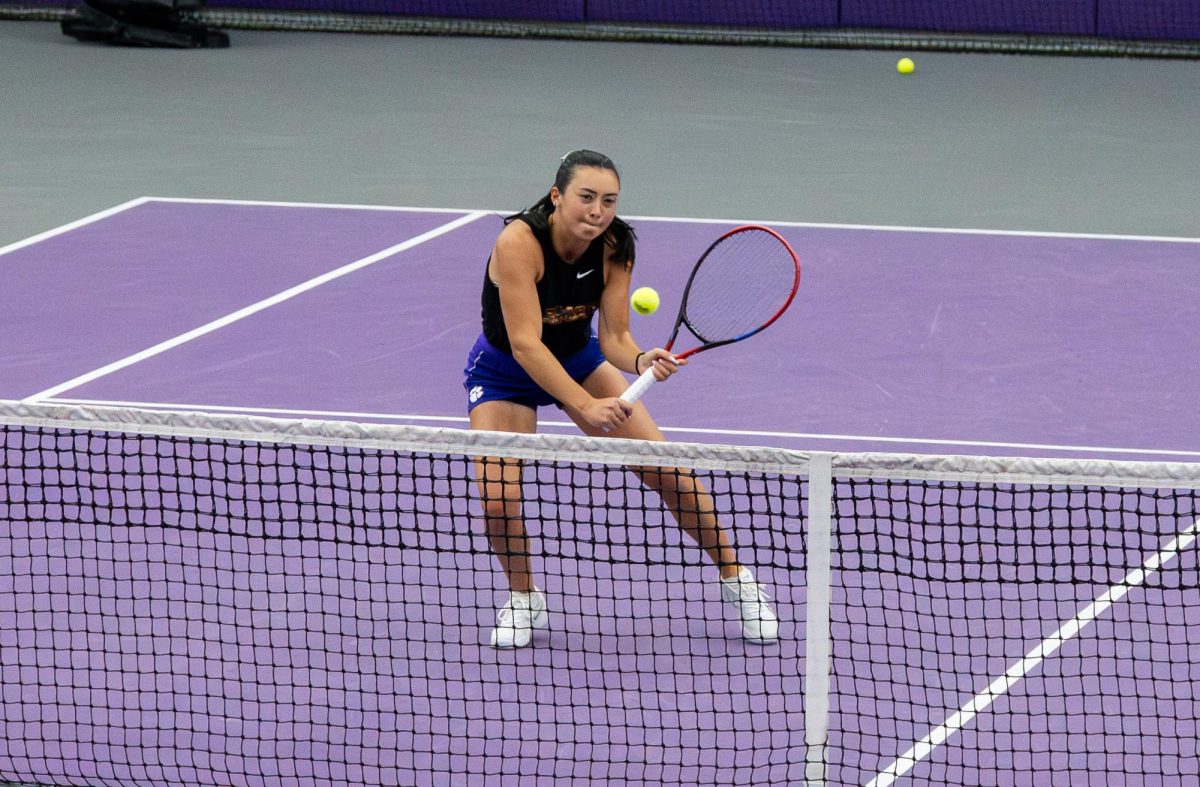
In addition to the no-let format, college tennis also has a no-ad rule. At the highest level, when a game reaches 40-40, a player must win two consecutive points to claim the game; at the collegiate level, the next point wins.
“It teaches you to be clutch under pressure, to kind of embrace the moment that you’re in,” said Maxwell Smith, a former Clemson tennis player. “It puts a lot of emphasis on each point.”
Tennis is physical chess, and has even been described as “mental torture” by English sports psychologist Katie Mobed. Victory belongs to he who wins the points that matter and holds their nerves best. If baseball is a game of inches, tennis is a game of millimeters, which is only amplified in college.
In college tennis, players call their own lines. But in professional tennis, all lines are called digitally by a tracking system, Hawk-Eye, which uses multiple cameras to pinpoint whether a shot lands in or out with incredible accuracy, taking a serious burden off players.
In college tennis, calling your own lines means players must make decisions on the fly while simultaneously trying to win every point. Most Division I matches have a chair umpire, who has the authority to overturn calls. If a player is overturned once, nothing happens. But if they are overturned a second time, it is a point penalty. Then, a third overturn is a full game penalty. It adds a daunting new element and a level of frustration when your opponent makes a call you don’t agree with.
“When you compare college tennis to the pros, there’s actually like less room for error in college,” Smith said.
Even the format of play is different. Most professional players play either singles or doubles, rarely excelling at both.
College tennis, however, is designed as a team sport, despite the fact that most matches are played individually.
Regular-season matches require a team to accumulate 4 points out of 7 total to claim victory. The first point is awarded to the team that wins two out of three doubles sets across three courts. Then, players must move directly to singles play.
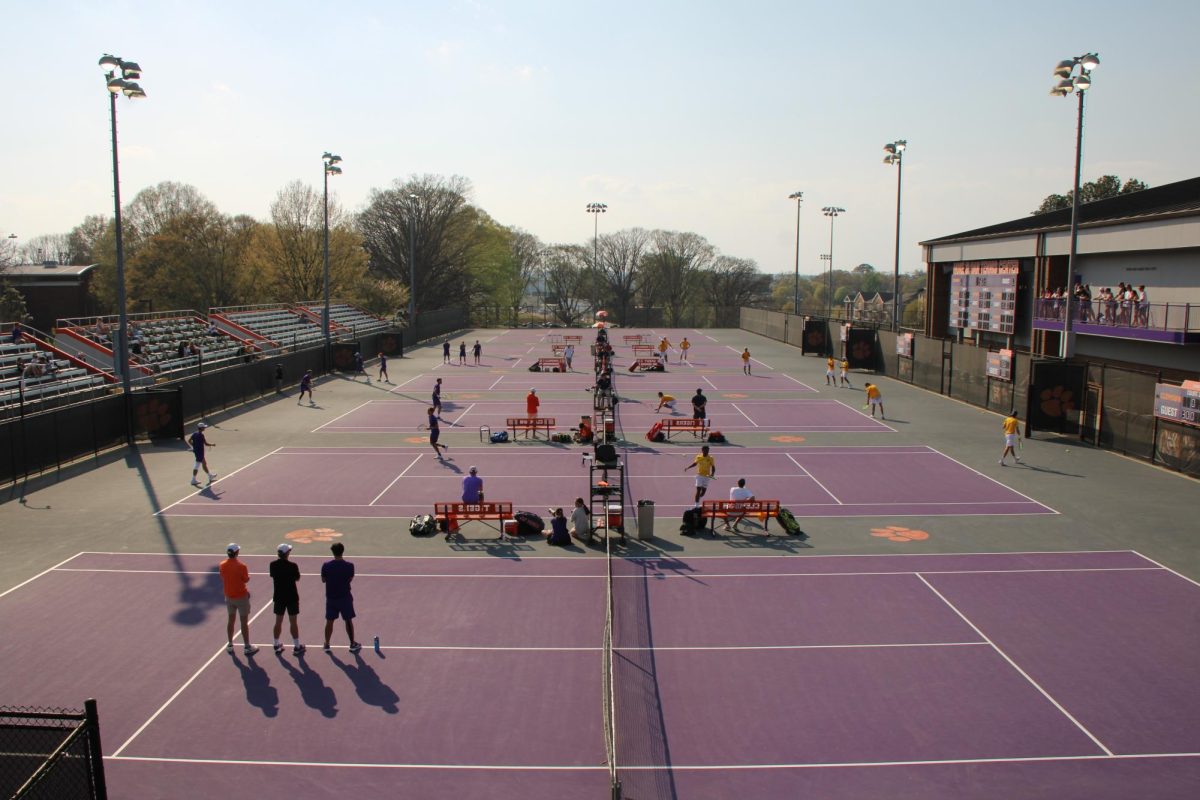
In singles, there are six courts, and matches are best-of-three sets.
The instantaneous switch from singles to doubles is unlike anything endured by ATP athletes. It requires versatility and often the ability to rebound from a heartbreaking loss in minutes.
Additionally, all matches are played simultaneously with constant noise, teammate support and live coaching in between points. Professional tennis demands complete silence, while college tennis feeds on energy, whether from the crowd, from teammates or from within.
As a whole, college tennis is centered around a mix of team strategy and individual mental and physical toughness. But then you must consider that these athletes are not just athletes; they are also full-time students. Nonetheless, the translation to the professional tour is really starting to show.
A total of 25 men with college experience, the most since 1989, made the 2026 Australian Open main draw. In a draw of 128 players, that is still less than 20%, highlighting that, although it is growing, the American college pipeline is still a minority.
Former Florida Gator and NCAA College champion Ben Shelton stands as the premier college tennis success story. Currently ranked No. 8, Shelton has proven the system’s legitimacy, and it is all about how he plays.
Shelton is a high-flying lefty fueled by energy and big shots. He has successfully captured the atmosphere of college tennis and brought it to a stage where it was previously unprecedented.
“I think college players are dogs, for the most part. I don’t feel like there are many college players who make it and come on tour and are soft,” Shelton said.