
Originally, I was apprehensive about Clemson’s $3 million deal with OpenAI; however, after a lengthy process of interviewing people across campus, I have become more open to incorporating artificial intelligence into my education.
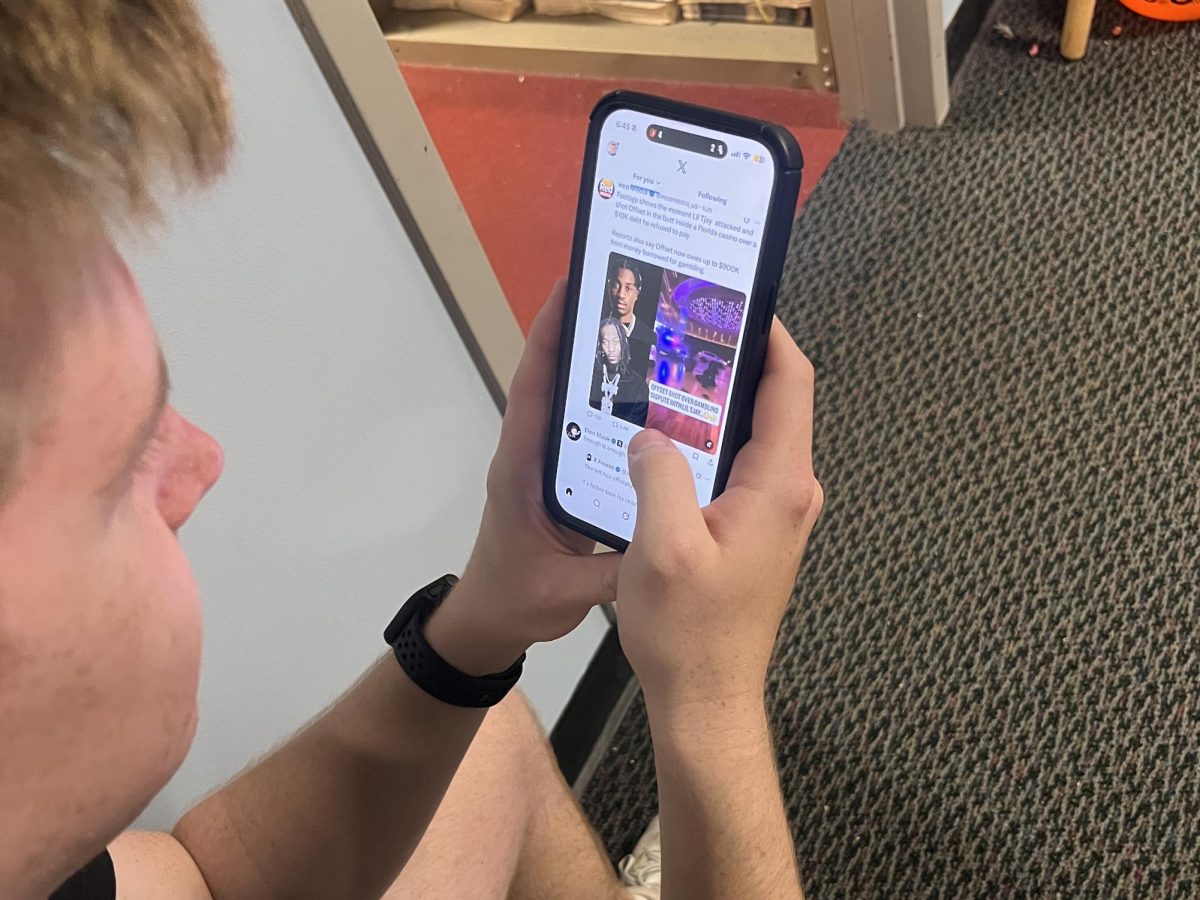
AI is the buzzword of the year — everyone seems to have something to say about it. Whether it’s about environmental impact, job security, creative freedom or the supposed loss of higher thinking, many people seem to share a concern. Pro-AI or not, the system has been rapidly changing the world around us and seems to be everywhere; almost every website has a chatbot, every search engine provides some type of AI summary — the list goes on. Social media, deepfakes, misinformation and all sorts of technology are changing in the blink of an eye for the online world that we all occupy. For college students, the increased integration of AI over the past few years has meant learning to navigate it in classes, job fields and everyday life.
Clemson announced its partnership with OpenAI earlier this semester, providing all students access to ChatGPT Edu, which caused a frenzy. How would this look in classes? How would AI be incorporated into each of our educations? But the question that stood out the most to me was one I read on a Yik Yak post one day:
“boy oh boy i hope employers really likes my degree from ai university.”
This got me thinking: how will this AI deal affect the value of my Clemson degree?
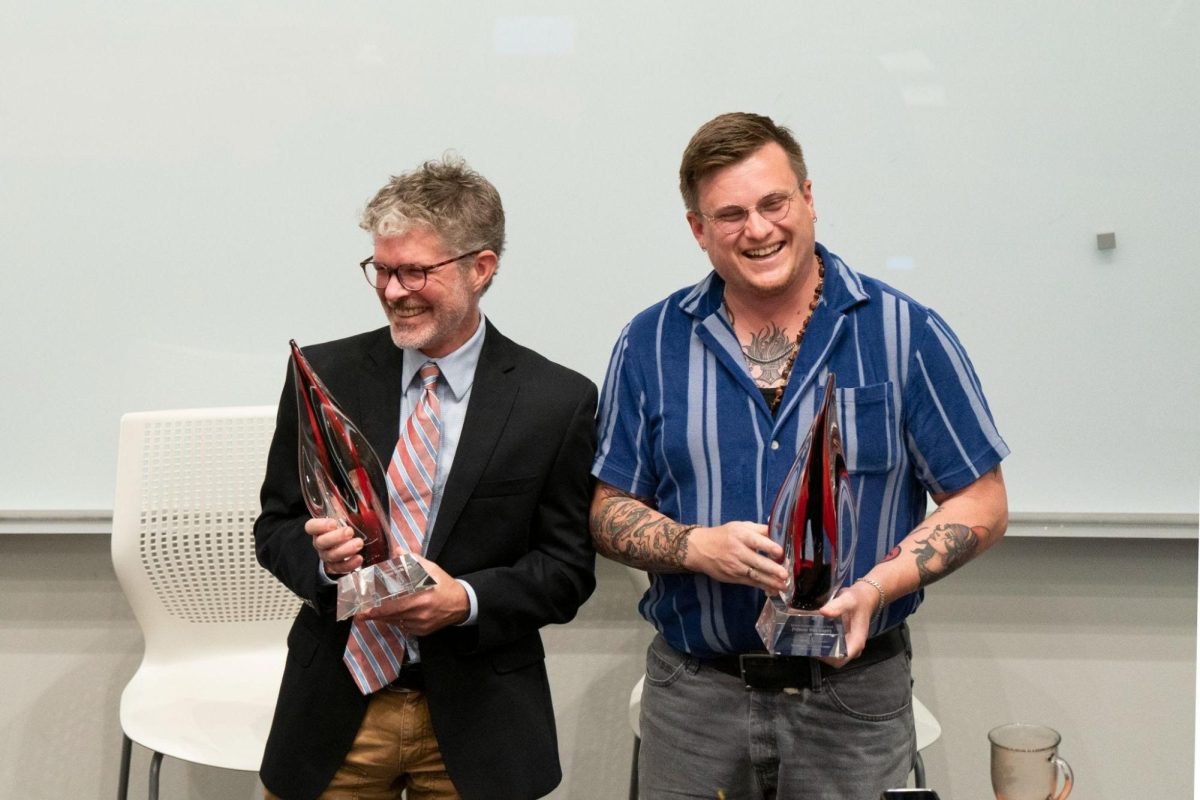
Mitch Shue, a provost fellow for AI and professor of practice at the University’s school of computing, and Nathan McNeese, Ph.D., assistant vice president for technology and innovation, are the heads of this initiative at Clemson due to their extensive experience with AI. The Tiger sat down with Shue and McNeese for an interview about student concerns regarding how AI will be implemented into their education and the overall aftermath of this deal.
Clemson Elevate, privacy and autonomy
Clemson Elevate is one of the driving reasons behind the initiative because of its second pillar, specifically the goal of doubling research by 2035. Another pillar is delivering the No. 1 student experience, which, according to Elevate, is done by closing opportunity gaps. Shue and McNeese pointed out that AI is already available at Clemson; the difference is that students who can afford the premium versions use it, while those without the means don’t, making AI use unequal. Clemson’s deal with OpenAI to fully cover student access to ChatGPT Edu allows all students to have equal access to the same AI tools often used in classes.
Shue and McNeese reassured that this deal is all about privacy and autonomy. Shue shared that never forcing students to use AI is one fundamental aspect of this initiative. AI use isn’t pushed onto students, but is rather a voluntary service that students can use when and if they opt in to the provided system. As for the privacy aspect, by making this deal, Clemson can ensure that student, staff and system data is kept private and secure.
Other schools have made similar deals
Other colleges have adopted AI use into their curricula as well to help prepare students for a more advanced tomorrow. Schools such as the University of California at Berkeley already have AI Hubs, while schools like the University of South Carolina are currently making and implementing their AI deals. So, this isn’t a groundbreaking action for Clemson to take; in fact, it’s just keeping up with the times and the competition.
Many students have similar ideas surrounding AI use in classes. Most know how to use AI responsibly as a tool to help them understand concepts and create practice questions or tests to study. Some classes even require students to use AI for certain assignments. In many of my own classes, we have to use some AI because the teacher wants us to gain experience with the technology.
“It’s pretty much unavoidable at this point,” Gab Eloporto, a freshman history and Spanish major, told The Tiger.
Ability to achieve higher thought
While there is an ongoing list of complaints around AI use in general, in college, it often boils down to career outlook, cheating and the ability to achieve higher thought.
The best part about college, in my opinion, is that it provides students the opportunity to truly develop skills of higher thought. You don’t just learn and regurgitate information anymore; you have to understand concepts, ask follow-up questions and apply your knowledge to your assignments. The use of AI seems to be nipping this in the bud for many students who think technology can do it for them.
“AI makes things easier by saving time and explaining concepts, but it can make learning harder if you depend on it too much and don’t develop problem-solving skills,” Sarah Majors, a sophomore construction science major, said.
Teachers recognize this issue of higher thought as well.
“We want to be careful about not shortcutting the cognitive process, particularly with brainstorming and drafting,” Mary Nestor, Ph.D., lecturer and associate director of first-year writing for Clemson’s English department, told The Tiger. Nestor also noted that the development of students’ thinking skills must be carefully nurtured.
“My professors are already worried about students’ ability to pre-think … (they) literally see it in their students, not actually doing the work, thinking less for themselves … a huge thing is being able to think for yourself,” Kara Dillon, a freshman political science major, said.
Shue believes that students committed to learning need to learn how to partner with AI to learn more information at a faster rate so they can graduate with “the outcome of a degree but with a much richer education.”
Confusion surrounding expectations
With the unease surrounding AI and cheating, students often have to bend over backwards to avoid sending up red flags for using AI in assignments, only to be told by some professors to embrace the technology, which leads to a lot of confusion and apprehension. One issue that could arise concerns academic dishonesty hearings and whether a student’s private AI usage could be used as evidence of their integrity or lack thereof, according to Shue and McNeese. Shue said that a faculty request for student data in such a situation would be immediately declined because student privacy is prioritized.
“There are many ways that you can use different technologies to enhance your learning or hurt your learning,” McNeese said.
Anxiety among students runs rampant due to not knowing where AI will lead in the future.
“I don’t think anyone is really prepared for what it’s going to turn into,” Elloporto told The Tiger. Michael Warrick, a freshman biology major, said he worries AI will make the job market more difficult for many people, echoing many students’ unease surrounding what entry-level jobs will look like postgrad — and if they’ll even exist.
Environmental impact
Many students and several faculty members raised concerns about AI’s impact on the environment, specifically the vast amount of water it requires to operate.
AI response generation has a hefty water tax, according to researcher Zohar Barnett-Itzhaki, who wrote in a ScienceDirect article that “generating 10-50 medium-length responses consumes the equivalent of a 500 ml water bottle.”
Broadly speaking, a common theme throughout history is that technology advances. As a society, we have to learn to adapt to this rapidly advancing technology, which is moving faster than we’re used to dealing with. Shue and McNeese noted that technology’s negative side effects, namely its environmental impact, can be beneficial, as they open up career opportunities such as research.
AI in STEM vs. arts and humanities
Many people have some sort of opinion on AI. I find that you get different opinions depending on who you talk to: STEM majors or arts and humanities majors. AI in STEM is all about data analytics and sorting through numbers, for which AI significantly reduces work time and can even run entire programs. To a STEM major, AI is a tool that can help with many tasks as long as you have a good grip on the technology.
On the other hand, AI is used more innovatively and creatively in the arts and humanities. I find there is a lot of apprehension from this group about adopting AI. The concerns seem to stem from the commonly held belief that AI will take over jobs in the arts and humanities, and in some ways, it already has. An artist might find AI a useful tool, while another might use it to do all their work for them. Nestor noted that an issue involving authors has arisen recently where AI companies scrape an author’s novel, regurgitate it and make a profit without permission or recognition for the original author, all for the sake of training their program.
Teachers need to ensure students are taught to use AI responsibly, tailored to the subject and their career goals. AI is not going away in the next couple of years, meaning it’s critical that teachers help students understand the uses of advancing AI technology in their fields.

“I don’t think the majority of classes teach you how to use it for their classes,” Warrick told The Tiger. “I just wish the professors would figure out take a little bit of time on their own to figure out what method works best for their own classes.”
Clemson Libraries has begun teaching foundational AI knowledge through its AI Tools and Literacy Hub, along with online Canvas courses. Additionally, an elective one-credit-hour class aimed at teaching students all about AI will soon make its way onto the University’s campus.
“The Libraries’ primary role regarding AI is to ensure that our students, faculty, and staff are aware of the tools available to them, how to use those tools ethically and responsibly, and how to think critically about AI and the results it generates,” Elias Tzoc, associate dean for teaching, learning and research, wrote. “We are here to help students navigate this new, complex digital information environment.”
Inevitability
To be frank, the overall advancement of AI is inevitable, and Shue and McNeese both told The Tiger that, given the way Clemson budgets its finances, this change was going to happen, no matter what.
“We’re a public university. Money is appropriated from a certain technology bucket, and it uses it or doesn’t use it,” McNeese said. “Sometimes things have to be spent in the way that they are delineated.”
Shue and McNeese also mentioned that the $3 million for the deal wasn’t ever intended for anything else.
The South Carolina Senate passed a bill, S. 225, in January 2025, aimed at supporting the development of AI technologies in the state. Clemson, along with several other public state colleges, was named in the piece of legislation, which notes that the South Carolina Senate supports the promotion of open-source AI development, safeguarding against “monopolistic tendencies of closed-source, for-profit AI entities” and creating a regulatory environment that guards against misuse while fostering innovation.
So, financially speaking, the deal was a great use of the money — AI was going to come to campus no matter what. Whether it’s the homework program your professor requires students to use, an assignment in class, help with a problem or searching something up, students using AI isn’t new. Why not spend the money on teaching students about the current biggest thing in technology, and keep our data private at the same time?
I understand opposition to AI. It’s not environmentally friendly, it has flaws and it often causes more issues when used in the wrong settings. But opposing Clemson making a deal with OpenAI — that I can do no more. We need to stay ahead in our studies and innovation in order to remain a University worthy of acclaim. Clemson accomplishes a lot of cutting-edge research, and this deal will offer students privacy with their AI usage and a greater opportunity to take advantage of the benefits provided by the school.

Worth of the Clemson degree
As for the question of the Clemson degree’s worth, Jeremy King, the associate provost for institutional effectiveness, shared that the initiatives he is familiar with are positioned toward making sure students graduate with the “ethical judgment and skills needed in a 21st century where AI will likely be present in nearly every vocation or profession.
“As I reflect, I believe a Clemson degree has always represented demonstrated capabilities, academic rigor, collaboration, and mentorship; it has not represented education in the absence of technologies,” King wrote to The Tiger, adding that he believes the AI initiative aligns well with the discovery and technological utilization aspect of Thomas Green Clemson’s will.
Chelsea Murdock, Ph.D., told The Tiger that from her position as director of the Clemson Writing Lab and through conversations with stakeholders within and outside the bounds of higher education, she sees the shape of degrees as unfixed.
“Programs may focus more on skill application and on functions that AIs cannot perform, and on how AI tools might work within specific professional contexts,” Murdock said. Clemson can only prepare for the next steps by helping students use the technology that will be expected of them.
“If you do not practice critical thinking, and you’re thrown into a situation you haven’t trained for: Can you play the game?” Murdock wrote to The Tiger.
McNeese added that if humans collaborate with AI instead of both parties acting separately, the work outcome is greater and more effective.
“We have to provide the education on what it looks like to partner with AI,” he said. “That’s the most important thing about the Clemson AI initiative: it’s human-centered. It’s student-centered. It’s employee-centered.”
Conclusion
I had been skeptical about how AI would be introduced in my classes and worried that employers might think the OpenAI deal means the Clemson degree I will graduate with is lesser than degrees of the past or ones from colleges that don’t incorporate AI. Now, honestly, I have changed my mind entirely. Clemson made the deal to better prepare students for a workforce where certain dynamics just aren’t the same.
We can’t leave school prepared for a world that no longer exists; we must keep up with the times. As said before, this deal was inevitable and a consequence of technological advancement, not of a controversial partnership. I never thought I would be on the side of embracing AI, but I really do think this is the best thing for students, faculty and employees. It’s making new technology as safe as we can for our use. To me, it’s the same as first learning to drive in an empty parking lot rather than on the interstate.
More information about Clemson’s approach to AI can be found at the University’s website.
Sarah Bandhauer is a junior food science major from Brevard, North Carolina. Sarah can be reached at [email protected].