
Feeling like you can’t say no and having no autonomy as an employee is a emotion that most of us have experienced during our time spent working minimum wage jobs. Being treated as sub-human, doing dangerous or humiliating tasks and being exploited by millionaires are some of the fun perks that should be tacked into these job descriptions.
Many people do not treat food service or retail workers like human beings. The common consensus seems to be that it is always the customers who are treating the employee this way. However, this is simply untrue.
Power figures in poorly run restaurants are the other side of this coin. Part of the human condition seems to always connect power with the exploitation of others. From my experience working for many of these people, common attributes of a leader are discarded, and instead, pettiness and apathy are favored.
“More often than not, those who attain power exhibit a particular and dangerous form of incompetence driven by impulsivity, recklessness, frequent carelessness, and become unaware of their own glaring inadequacies and the lack of rational arguments behind their decisions,” according to Great People Inside.
Employers or people in positions of power may feel that the rules no longer apply to them once they have climbed one step higher up the chain. For example, there were recent reports of one hundred-plus McDonald’s employees who endured assault and abuse from managers, according to Business Insider.
“Many of the workers said their managers were the perpetrators of the behavior, and some said they felt scared to report it, or that they did and nothing came of it,” according to Business Insider.
If the people in positions of power cannot be trusted, then how is an employee supposed to feel they are in a welcoming environment with the potential for growth?
Fear and danger are normal and expected parts of life, but with toxic work environments being increasingly common, it is also tough to deal with the fear associated with some customer interactions.
A study from the Loss Prevention Research Council showed that about half of retail workers have faced aggressive or harassing behaviour from customers, prompting many to consider leaving their jobs.
A surprising number of higher-ups in the food service industry do not seem to care about the well-being of their employees, and sometimes seem to forget things like safety when implementing new rules and systems.
I recall a humiliating personal memory of being made to take orders outside with no cover or infrastructure, despite having a drive-thru speaker. The only option offered was a large, multicolored umbrella hat. Looking past this humiliation ritual, another danger that went ignored was having employees stand alone at night in a sketchy area.
Employers seemingly taking advantage of their employees is not a new concept. “Rather than attempt to attract a historically underpaid workforce with improved benefits or raised wages, many employers are attempting to lure in prospective employees with false promises of wages they will never receive,” according to On Labor.
If bosses and employers are able to get away with misleading their employees, it raises a larger question of how many things they could be lying about. I have started paying close attention to what age range the employer hires and how deceptive their practices are since being burned by these jobs over the years.
Be wary of businesses that do not disclose pay stubs, hire exclusively young people and have a turnover rate faster than mosquitoes reproduce. If it seems too good to be true, it likely is.
Ultimately, power has a twisted taste for those who get to taste it. Having a misunderstanding of how leadership operates can poison morale and create a toxic, horrific place to work. When put into a leadership position, we should all try to be better than this common leadership practice.
Sophie St. James is a junior English major from Central, South Carolina. Sophie can be reached at [email protected].
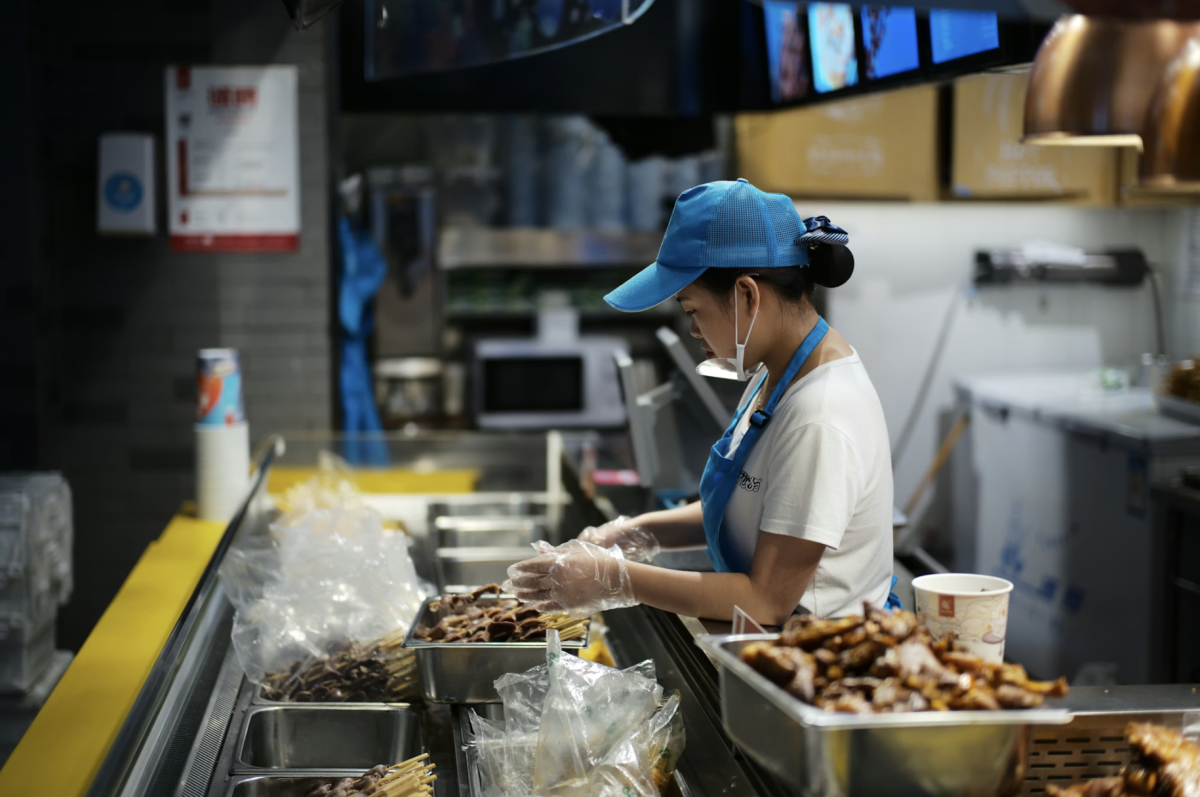
It feels like workers are taken advantage of in their minimum wage jobs.
Fenghua // Unsplash