
For most Clemson students, winter break is a chance to relax and unwind after the stress of the fall semester and final exams. But for some ambitious students, the break aspect is optional, as they dedicate the time between semesters to serving others.
Three student organizations: Christmas 4 Kids, Catholic Tigers and Engineers Without Borders, used their time to effect change in others’ lives, whether that be here in Clemson, in Kentucky or all the way in Rwanda.
Christmas 4 Kids
The Thomas F. Chapman Leadership Scholars Program hosted its annual Christmas 4 Kids event, distributing Christmas presents and hosting a Christmas event for underprivileged children in the Clemson area.
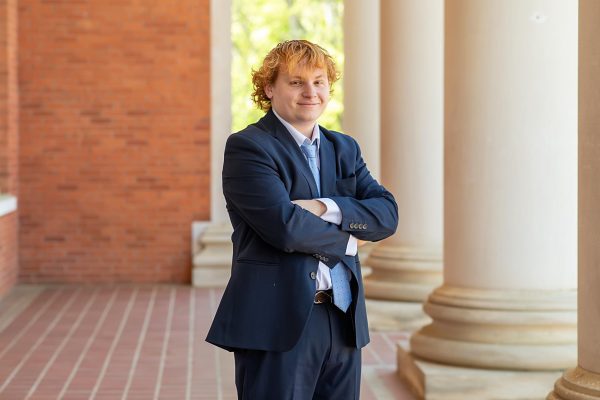
Daniel Ocampo, a senior secondary education major, walked The Tiger through the Chapman Scholars program and the Christmas event process.
According to Ocampo, the program is a three-year leadership development program for first-year students.
“It focuses on building leaders through the values of intellect, courage, and heart. Scholars take part in leadership training, service projects, mentorship, and creative learning experiences,” Ocampo stated.
“The mission is simple: give kids the best Christmas they will never forget,” he told The Tiger.
The program focuses on serving underprivileged children, and specially designs the entire experience to make it the best possible Christmas experience for them.
Schools send the organization a list of toys that each child wants for Christmas, which volunteers then use to buy gifts with their own time and money.
Ocampo said the scholars then schedule an all-day event, during which kids come to campus to receive their gifts. They engage in other activities, such as playing games with volunteers, eating snacks and doing arts and crafts.
The event is preceded by a year-long preparation, which is the primary undertaking of the senior class of Chapman Scholars.
Immediately following the event, the junior Chapman Scholars class takes over and begins planning for the following year. New directors are picked by the cohort, and then work begins on the improvements, organization and logistics for the upcoming event.
Ocampo also discussed the reach of the event, stating that it serves over 100 kids, but that the impact extends even further.
“Volunteers are deeply affected by seeing the joy on a child’s face when they receive their gifts and spend the day together,” Ocampo told The Tiger.
He also discussed teachers’ reactions during the event: “For us as Chapman Scholars, it means a lot to be able to serve in this way and keep this tradition going.”
Finally, Ocampo noted the collaboration required to put on such an event.
“Collaboration is everything for this event. It takes a lot of incredible people working together,” he explained.
The working parts include faculty advisors, the scholars themselves, student volunteers, teachers, guidance counselors, local businesses and others who donate.
“Everyone plays a role in making Christmas 4 Kids possible.”
Catholic Tigers
Clemson’s Catholic Tigers recently undertook volunteer work in Harlan and Cumberland, Kentucky, replacing a roof on a trailer home and volunteering at a food pantry.
Caroline Dietrich, a senior health science major, explained the rationale behind the chosen location.
“Terrence Bell, the Catholic tigers service chair, wanted to plan a mission trip that was affordable and relatively local,” Dietrich explained. “This made the trip more accessible and practical for many students, especially over the Christmas holidays.”
The trip’s financial requirements were fulfilled either by the volunteers paying for their own trip or through outside fundraising efforts.
Micaela Jackson, a junior secondary education major, explained the fundraising makeup. There are two options: “you either paid out of pocket the trip total or fundraised,” Jackson told The Tiger.
“Personally I fundraised the entirety of the trip which covered my portion of housing and food,” Jackson stated. She did this through phone calls and letters to individuals from her home parish, as well as reaching out to friends and family.
Jackson and Dietrich also spoke about their personal experiences and the impact the mission trip had on them.
“Serving in Kentucky allowed me to recognize the importance of being grateful for all we are blessed to have, no matter the size,” Jackson explained.
This opportunity emphasized for Jackson that “you never know what someone is truly going through, and the smallest act of kindness can change someone’s day, week, or life … Regardless of the end goal, knowing that God will equip us with whatever we need to serve others has helped me make a difference to those around me.”
Dietrich added that the mission trip reignited the group’s desire to serve local communities, both in Clemson and at their homes.
“Personally, this trip reminded me of the opportunity to serve with Catholic Tigers at the Clemson Community Care Center,” she told The Tiger. “Service work is so important, not just one week out of the year, but lived out weekly, in our own Clemson community.”
Engineers Without Borders
Access to clean drinking water is one of the most important factors for a healthy life. Yet, nearly one in three people worldwide lacks access to clean drinking water, according to the World Health Organization.
Over the break, the Clemson chapter of Engineers Without Borders traveled to Kagarama, a village in the Kigali province of Rwanda, to build a well for the village.
“There’s a community in Rwanda without access to clean drinking water,” explained Chris Mabey, Ph.D., the club advisor and an assistant professor in mechanical engineering. Mabey discussed how the location’s drinking water is prone to contamination from animals, farming and a multitude of other factors. This project involves building a spring box, which essentially protects the water source and maintains its cleanliness.
After a surveying trip in March 2024, and an extensive design period during which the group developed the spring box they would construct, the Clemson EWB chapter traveled to Rwanda to begin their work.
The Tiger spoke with mechanical engineering majors Anna Hughey and Aiden Tombuelt, EWB’s treasurer and former president, respectively, on their experiences during the 2024 assessment.
“I could talk for so long about this,” Hughey told The Tiger.
“The thing that sticks out to you when you go is that everyone is so, so friendly. They’ve put so much of an emphasis on collaboration and community. We learned a couple of words in Kinyarwanda. We’d say hello, and the locals would be like, ‘Oh my gosh! Muraho! That’s exactly how you pronounce it!’ It was great.”
“It was a fantastic experience,” Tombuelt conveyed.
Following graduation from Clemson in 2024, Tombuelt worked for the environmental engineering consulting firm SynTerra Corp in Greenville, South Carolina.
When it came time to install the well, Simon Draper, a senior mechanical engineering major and EWB vice president, discussed the procedure and the challenges they faced.
Draper said that the installation itself turned out well, and the community reported that the water was cleaner after the survey. They were surprised by how significantly the new taps improved the lives of those in the community by allowing them to collect water more quickly.
“The biggest challenge during construction was that the ground we planned to build on was flooded and couldn’t be drained. Spring water needed to be piped to a nearby dry spot to build the tap stand,” Draper said.
Whether across the world or in their own backyard, EWB has always maintained that access to water and infrastructure improvements are necessary for humanity.
Josh Taylor, a junior biomedical engineering major and EWB chapter president, discussed the desire to expand the club’s reach.
“One of my bigger goals since taking over has been to improve our footprint on the South Carolina area,” Taylor explained.
Since the organization continues to grow in number and accessible resources, it’s able to take on more projects.
“Ideally, we go from a club that has a project in Rwanda to a club that has a project in Rwanda and projects in rural South Carolina,” he continued. “We can make impacts on multiple parts of the world and in multiple cultures.”
This doesn’t mean that the chapter’s goals are without roadblocks, as Taylor later revealed. The biggest challenge to EWB’s mission is adequate fundraising.
“It feels like it’s kind of a never-ending race,” Taylor disclosed. “Concrete and place tickets aren’t cheap. Through personal donations, fundraising, and money we’ve gotten from the University, we were able to travel.”