

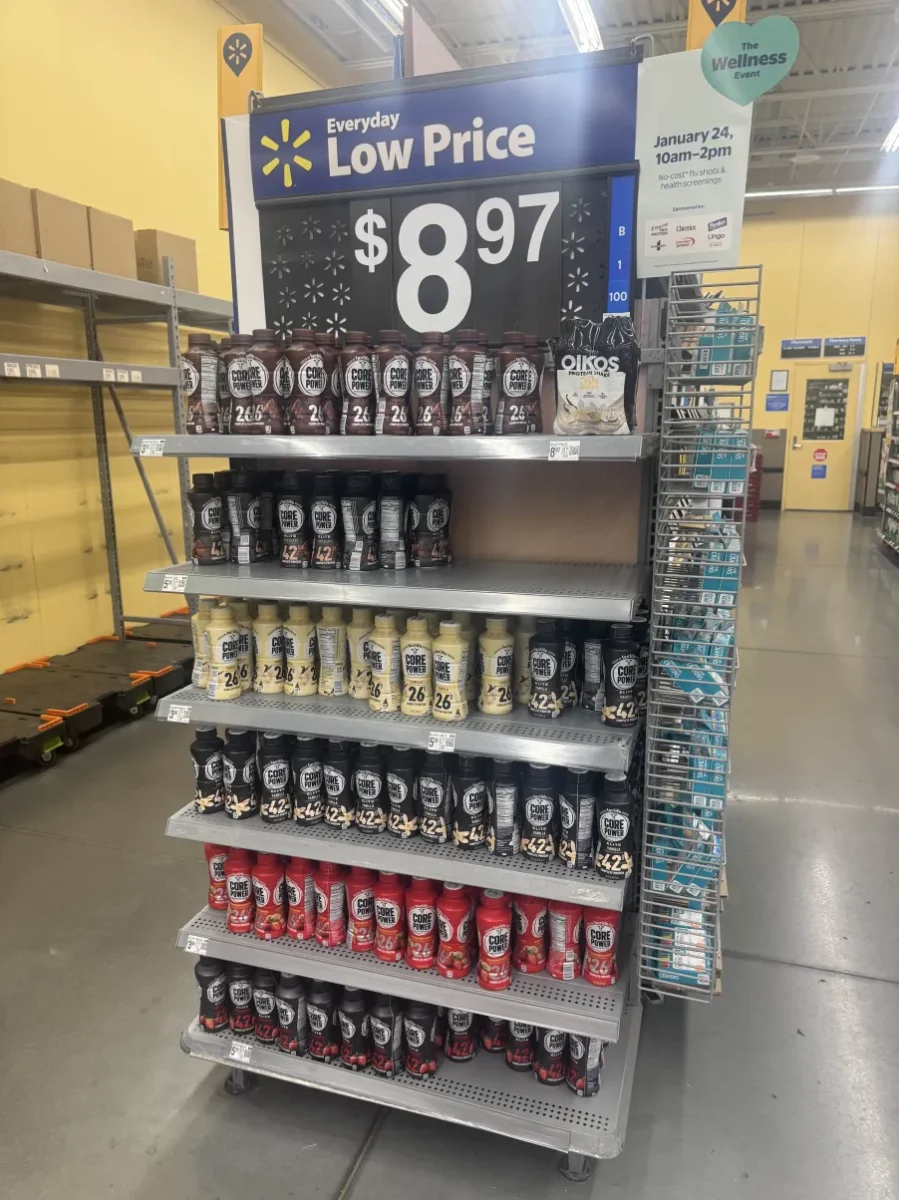
Nowadays, a trip to Starbucks or the grocery store automatically comes with a side of protein. Protein is no longer something you only find in chicken or eggs; it’s now in coffee, cereal and everything in between.
Many consumers have been led to believe that they can never have “too much” protein, a misconception that has been fueled by social media for years. In response, companies have rushed to fortify foods and drinks with added protein, marketing it as an easy way to boost intake. But at what point does more stop meaning better?
Gym culture surged among Gen Z after the COVID-19 pandemic and accelerated rapidly into 2024. This shift increased interest in high-protein diets and supplements, as many people are in pursuit of a certain aesthetic and extreme muscle growth.
Social media platforms like TikTok, influencers and food companies have further pushed this trend by promoting protein-heavy recipes and adding whey isolate powder to everyday products. Their strict marketing language capitalizes on fitness identity and suggests that eating more protein will automatically make you healthier. In reality, companies use these marketing strategies for convenience, trend alignment and visibility — not for consumer benefit. I mean, when was the last time everyone actually needed a protein Pop-Tart?
Moreover, the craze surrounding high-protein diets amplifies the spread of nutrition misinformation on social media. Many influencers and self-proclaimed nutrition experts are quick to promote extreme protein targets to gain followers and earn commission, despite lacking scientific evidence. The phrase “1 gram per 1 pound of bodyweight” has grown in popularity across social media, often used to encourage excessive protein intake in hopes of building more muscle.
However, this claim lacks accuracy. Research shows that muscle gain typically plateaus once daily protein intake exceeds roughly 0.6 grams per pound of body weight. Additionally, consuming protein well above recommended amounts can increase digestive discomfort and trigger harmful cellular signals that over-activate immune cells, contributing to plaque buildup in blood vessels and raising risks for heart attack and stroke, as shown in research from the University of Missouri.
Protein itself is not the enemy; the marketing narrative surrounding it is. Our generation is constantly exposed to conflicting nutrition advice, making it increasingly difficult to maintain a balanced diet. While protein plays an important role in health, it should not come at the expense of fiber, carbohydrates, healthy fats and other nutrients. At some point, prioritizing high protein becomes less about nutrition and more about hype.
Sarah Neighbor is a freshman biochemistry major from Columbus, Ohio. Sarah can be reached at [email protected].









Lindsey • Feb 5, 2026 at 3:38 pm
I majored in Nutrition at Clemson and have been screaming this since this craze started. THANK YOU for writing such a well researched article about this. All nutrition fads and “miracle” diets should be approached with a healthy dose of skepticism. Keep doing what you’re doing!!