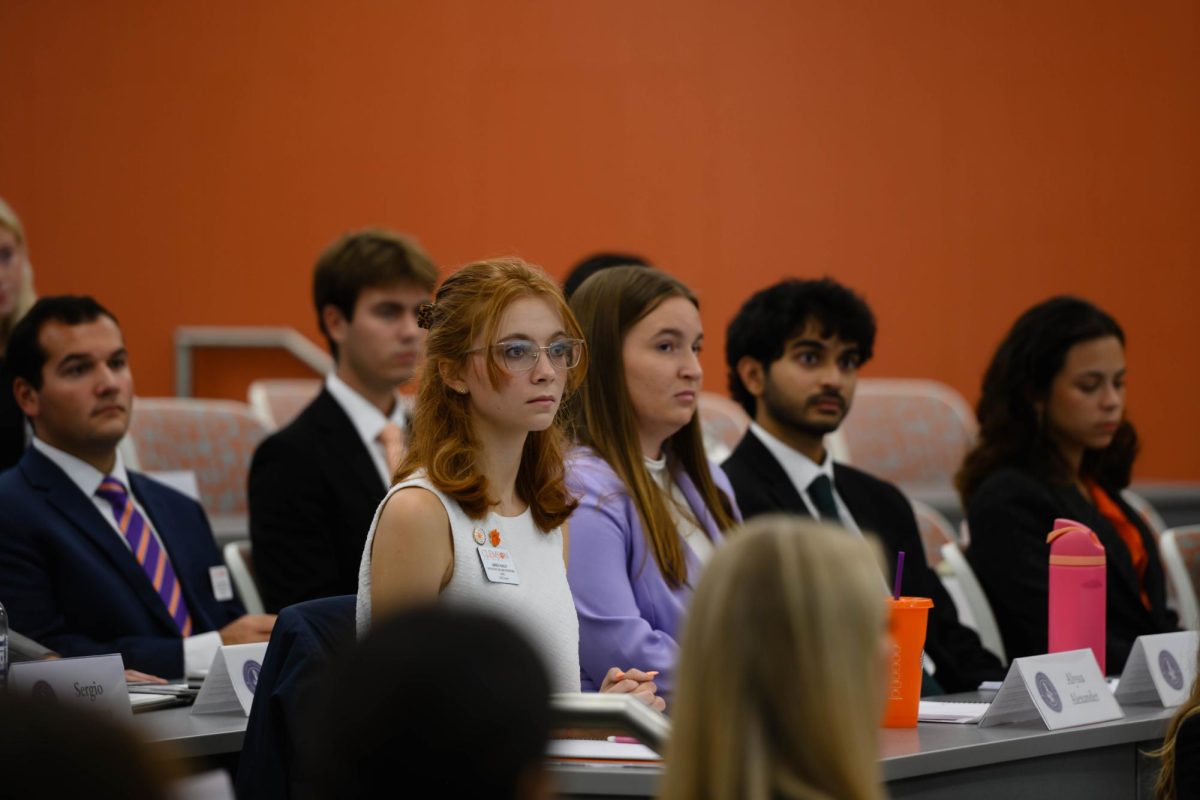


In a last-minute special meeting called to order on Thursday, Clemson’s Undergraduate Student Senate passed a temporary rule to delay student body elections and failed to approve a constitutional amendment that would increase the publicization of election conduct.
“We think this is the best way to move forward with this election,” Sen. Michael Morgan, finance and procedures chair, said regarding the temporary rule. “We’re all in this room tonight because we care about CUSG.”
The rule was authored by Morgan and President pro tempore Jessica Pressley, and sponsored by Maddy McKinley, secretary of the elections board.
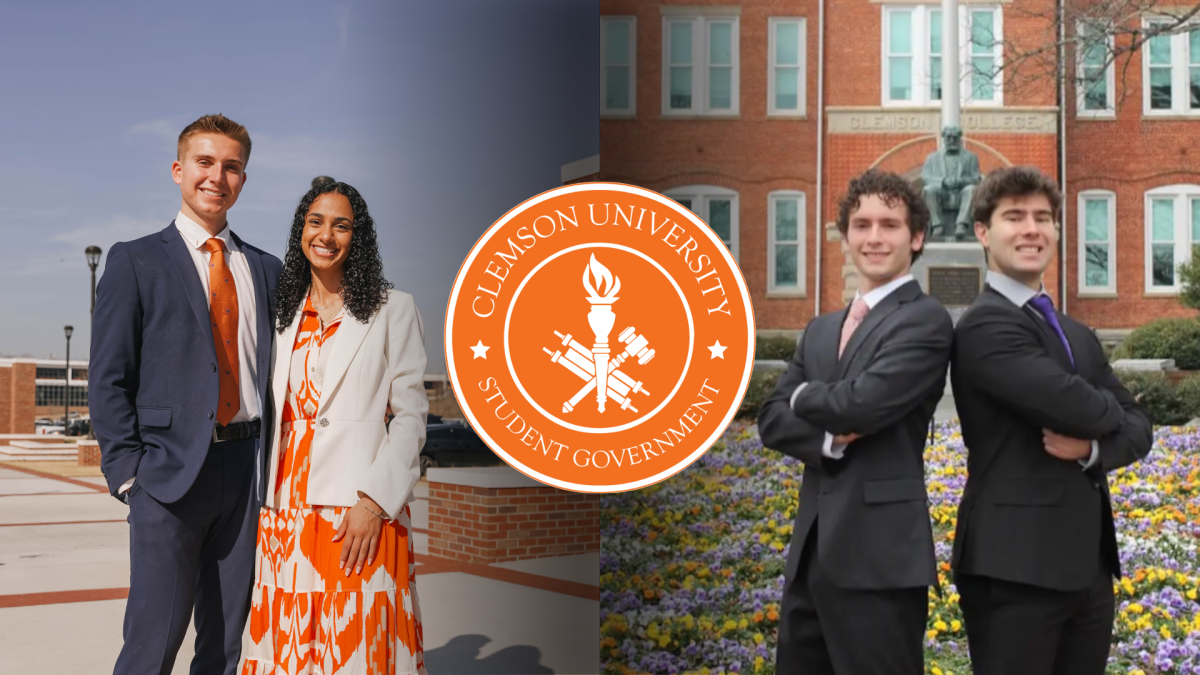
The election circumstance prompting the rule was that the disqualified ticket, Trey Dowling and Sasha Suggs, was the only one running for student body president and vice president during this election cycle. The ticket’s disqualification means there are no longer any candidates seeking election.
The rule gives the disqualified ticket a chance to resume campaigning if the candidates’ appeal is successful, according to Morgan. It also opens availability back up for students interested in seeking election.
McKinley told the Senate that six people and three candidates went to the interest meeting in the fall, which students running for office are required to attend. However, only two people — one ticket — ended up actually campaigning.
Several senators brought up the unprecedented nature of this election cycle and urged that the temporary rule’s passing is the best step forward.
“Things have drastically changed,” Sen. Emalee Mann said. “Our hands are tied.”
“There’s no alternative to this,” another senator noted. “We have to make sure this is a regulated election.”
“We need standards and rules for this (election) to function well,” Sen. Mario Torres said. “What happened last year cannot happen again.”
The other piece of legislation up for debate — a constitutional amendment — missed approval by a thin margin.
The amendment would require the Student Supreme Court to issue a “written and public decision” articulating its reasoning and final decision for its rulings. This includes a “majority opinion, concurring opinions, and any dissenting opinions, upon the conclusion of all cases within its jurisdiction,” with the exception of individual misconduct cases, according to the proposal.
The majority of the meeting consisted of thorough debate and discussion regarding the amendment, with strong opinions coming from both sides of the issue.
“Everyone should follow the rules,” Torres, who co-authored the bill with Sen. Fernando Medeiros, said. “We just want the (student) body to know, and to trust us.”
Zach Freeman, current student body president, questioned whether the amount of publicization and transparency that the bill entails would be harmful to the mental health of students running for office.
Chris Davis, advisor for the Student Judicial Board, strongly opposed the amendment. He said the bill doesn’t have parameters and would yield too much scrutiny for students running for office.
However, multiple senators made the point that when students decide to run for office, they are subjecting themselves to both a higher standard and an increased level of scrutiny from the student body. Additionally, those who run for election have the understanding that bylaws and legislation can change at any moment.
“Clemson leaders and student leaders are held to a higher standard,” Torres said. He added that the bill was presented to the elections board prior to the special meeting, and the board approved.
Sen. Danielle Brown added that the bill would allow the student body to know important information about elections, therefore fostering transparency.
She added that several of the meeting’s conversations have disheartened her, and that she’s seen a regression in CUSG since she became involved.
“There’s a lack of transparency,” Brown said. She believes this change has resulted from CUSG’s increased efforts to protect its image.
“You’re representing the student body as a whole,” she reminded the Student Senate, noting that rumors and the unknown are a “dangerous place to be.”
Mann said she’s torn about the bill and how it would be taken publicly. She believes that while student leaders are held to a higher standard, they are still people and deserve grace.
Multiple senators expressed concern with the timeline of the bill and that it’s a reactive piece of legislation following the Dowling-Suggs ticket’s disqualification. Others believe it sets a negative precedent and could blindside those running for election.
“I don’t know what happened, and honestly, I don’t really care,” one senator said.
Additionally, concerns were raised regarding how students might be affected post-election if information about misconduct during the election was publicized, specifically in terms of future employers.
Yet, proponents of the bill noted that the student body has a right to know about what actually happened with Dowling and Sugg’s disqualification, and that transparency will ensure a clear judgment of the candidates.
“If people trust the election, they will vote in the election,” Sen. Angel Feliz, inclusion and equity chair, said during the meeting.
Feliz wants to increase voter turnout, especially following last year’s turnout: around 1,000 undergraduate students out of nearly 30,000 voted in the second election. He believes this bill will help restore students’ trust in the election and CUSG as a whole.
Student body Vice President Maya Khaskhely spoke about her experience as the only senator in the room who has endured the election process from a similar standpoint.
“People speculate, and it’s not great,” she said. “We came into this administration knowing we had to rebuild that trust with the student body.”
Khaskhely believes that people would have empathized with her and Freeman if they had known what truly happened during last year’s election, where the two ran against Eli Warnock and Ally Fields, as well as Daniel Ocampo and Bailee Tayles.
Passage of the bill could entail holding any of the tickets’ 15 campaign staffers accountable for fault in disqualification as well, which Khaskhely believes could take some of the blame off the presidential and vice presidential candidates.
She expressed hesitation that the bill entirely complies with FERPA, the Family Educational Rights and Privacy Act, which protects the privacy of student education records and allows parents and eligible students to have rights concerning the access, disclosure and amendment of the records.
The bill did not pass with a two-thirds majority, as 22 senators voted in favor and 15 voted against.