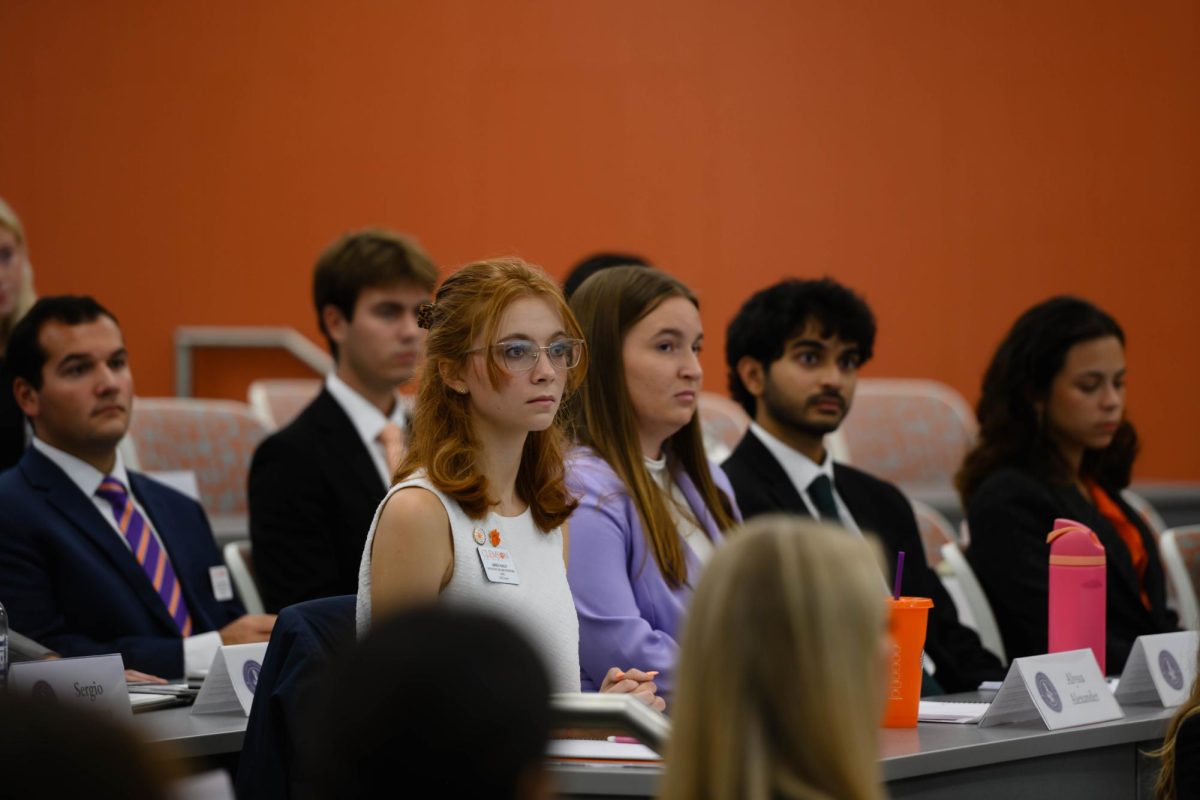

On March 4, the Clemson University Student Government elections board hosted its debate for student body president and vice president candidates for the 2026-2027 school year, following the disqualification of its former sole ticket.
On Feb. 5, after the sole ticket for student body president and vice president, Trey Dowling and Sasha Suggs, were disqualified, the Student Senate voted to delay elections.
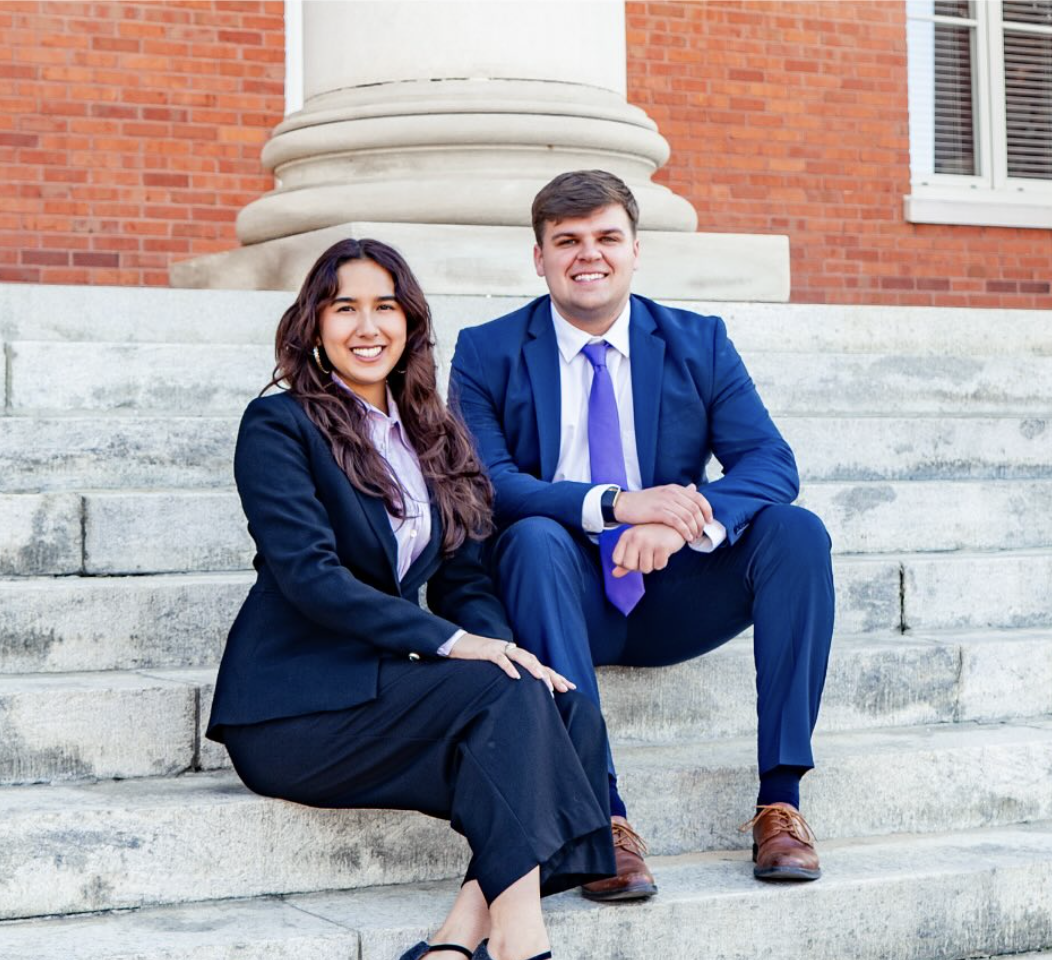
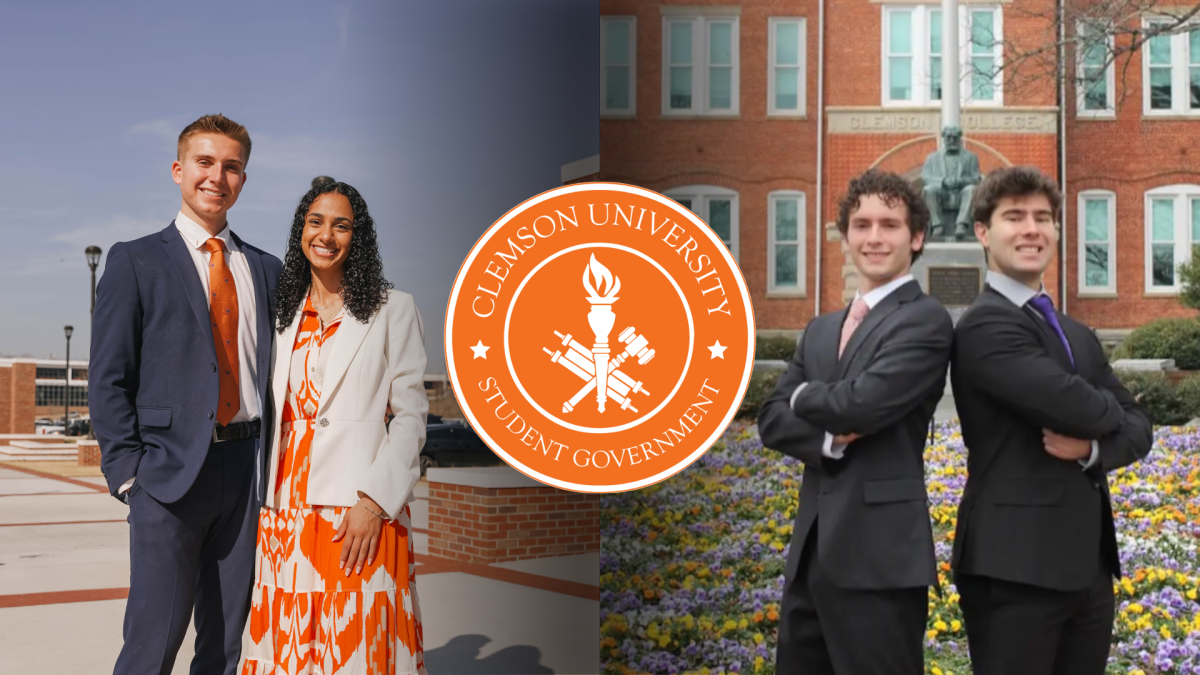
Since that decision, two new tickets have been filed for candidacy: Sergio Romero and Ata Ozer as well as Rosie Hanna and Brady Young.
CUSG serves as a liaison between the student body and campus administration. Elected or appointed members of the three branches — legislative, executive and judicial — represent the unique needs of each Clemson student.
The student body president is at the helm of the executive branch, and the vice president is a member of their cabinet and also serves on the Student Senate executive committee, according to the CUSG governing documents.
Following a successful petition to the board of elections, candidates follow a strict campaign schedule before the student body votes. This includes the debate between opposing tickets.
Sergio Romero and Ata Ozer
Romero, candidate for student body president, is a junior honors industrial engineering and finance double major from Chicago.
Ozer, running for student body vice president, is a junior industrial engineering and management double major from Spartanburg, South Carolina.
On campus, Romero is a member of CUSG, serving as vice chair of the infrastructure and operations committee and chair of the third places committee. He is also a member of the Student Funding Board, a Lyceum scholar and worked as a cultural engagement director for the Clemson department of engineering.
Romero’s running mate, Ozer, has served as the functional management director for Clemson Engineers for Developing Countries, led a research group for an invite-only creative inquiry and has held multiple engineering internships.
Their campaign slogan is “Built by Tigers. Driven by You.”
The pair believes their unique analytical perspective, combined with their experience leading and implementing engineering projects, will make them the best fit for the job.
“We are committed to opening the doors of student government and making sure that CUSG becomes what it was always meant to be,” Romero said during the debate.
Romero and Ozer have structured their campaign around six core pillars: student wellness, academic resources, student engagement, diversity and inclusion, campus safety and sustainability.
First, the candidates promise to champion student wellness. They recognize that mental health challenges have become more prevalent among students. Their goal is to expand resources such as CAPS and reduce the stigma surrounding mental health so that no student feels alone.
Second, they want to empower academic achievement. To achieve this, they aim to raise awareness of campus resources, reduce costs through textbook initiatives, improve library spaces and expand mentorship programs.
Third, they desire to bring the campus to life. They want to improve club-matching tools, connect undergraduate and graduate communities and build more inclusive traditions. In addition, they plan to open up direct feedback channels with the student government.
Fourth, the two pledge to foster a sense of belonging on campus. They will achieve this by setting aside funding for cultural programs, creating spaces for open dialogue and implementing accessibility improvements.
Fifth, they vow to strengthen campus safety. The candidates hope to increase nighttime safety, offer improved prevention education and partner with students, faculty, campus and local officials.
Sixth, the candidates plan to invest in a sustainable future. By reducing single-use waste, implementing energy-saving projects and promoting the Green Fee, they aim to support feasible change.
The pair explained that these goals would not be possible to achieve without a concrete plan, which Romero broke down into phases.
Phase one is the planning and listening phase, which will include engaging students with standardized students to build a database in order to structure initiatives.
In phase two, communication and awareness, the administration will partner with student organizations.
Phase three is where policy action happens and phase four focuses on implementation and institutionalization.
To keep open channels of communication with the student body, they are “going to publish transparency boards and tracking reports,” Romero said.
Entering the race was not something that either Romero or Ozer took lightly. Initially, Romero was seeking a leadership position in the CUSG Senate. Over time, and through lots of conversations, he realized that his vocal, sometimes polarizing nature was better suited to the executive branch.
The pair is confident in their ability to lead the student body together, due to their broad range of experience.
Rosie Hanna and Brady Young
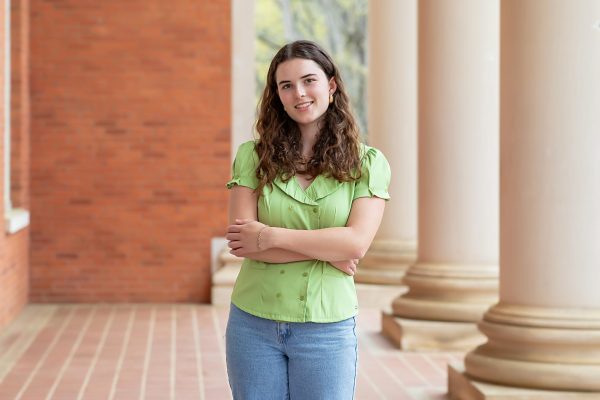
Hanna, candidate for student body president, is an honors junior marketing and economics double major from Charleston, South Carolina. She previously served as the secretary of communications and public relations for the Freeman-Khaskhely administration.
Hanna’s other campus involvement includes leadership roles in Delta Sigma Pi, an international business fraternity, serving as a tour guide for Clemson University Tour Guides and membership in the Middle Eastern Student Association, the Catholic Students Association and Clemson Sailing Club.
Young, student body vice president candidate, hails from Clarksville, Maryland. He is a junior honors student studying financial management and accounting.
Young is the president of the Eta Alpha chapter of Pi Kappa Alpha, serves as an ASC accounting tutor, is a member of the IPTAY student advisory board and is involved in the Clemson Interfraternity Council.
First and foremost, the candidates state: “We believe in honoring the will and vision of Thomas Green Clemson.”
Their slogan is “Raised by these Hills, and Rising for Them.”
Hanna and Young have both been deeply moved by the poem “Something in These Hills,” by Joe Sherman, class of 1934.
Their campaign is built on five central pillars.
First, the desire to have a tradition with a purpose. Hanna and Young hope that tradition will be better understood and valued as a feeling, rather than just an action.
Their number one priority is sharing Clemson’s deep history.
One of their goals is to enhance “CU 1000 to include Clemson history … the good, the bad and the ugly,” Young said.
Second, they want to redefine audience-centered communication. By weaving connections into campus infrastructure, their goal is to bring together different individuals and organizations with intentionality.
Third, the ticket resolves to amplify every voice, elevate every student. To achieve this, they will improve transparency through honesty and visibility.
The pair hopes to provide opportunities for all voices to be heard and “expand on the idea of what it means to be a Clemson Tiger,” Young said.
Fourth, their goal is to have Clemson be a place to belong: leveling the playing field. They are committed to a “Clemson For All” initiative that will designate underused spaces to foster a sense of connection.
“ClemsonLIFE is one of the most integral parts of Brady and I’s experience at Clemson University,” Hanna said. They hope to expand the involvement of ClemsonLIFE students across campus.
Fifth, their mission is across the hills: beyond campus, with community. This will be achieved through a database connecting students and alumni and giving the student body vice president a critical role in town-and-gown relations.
Young emphasized their commitment to adaptability while holding firm to their values.
When asked why the ticket entered the race during the special election instead of during the original campaign, Hanna was vulnerable. Even though the desire to run for office was stirred in her heart last semester, she did not feel like she had the capacity to do so at the time.
Now, Hanna expressed that she is confident in her ability, alongside Brady’s, to lead the student body.