
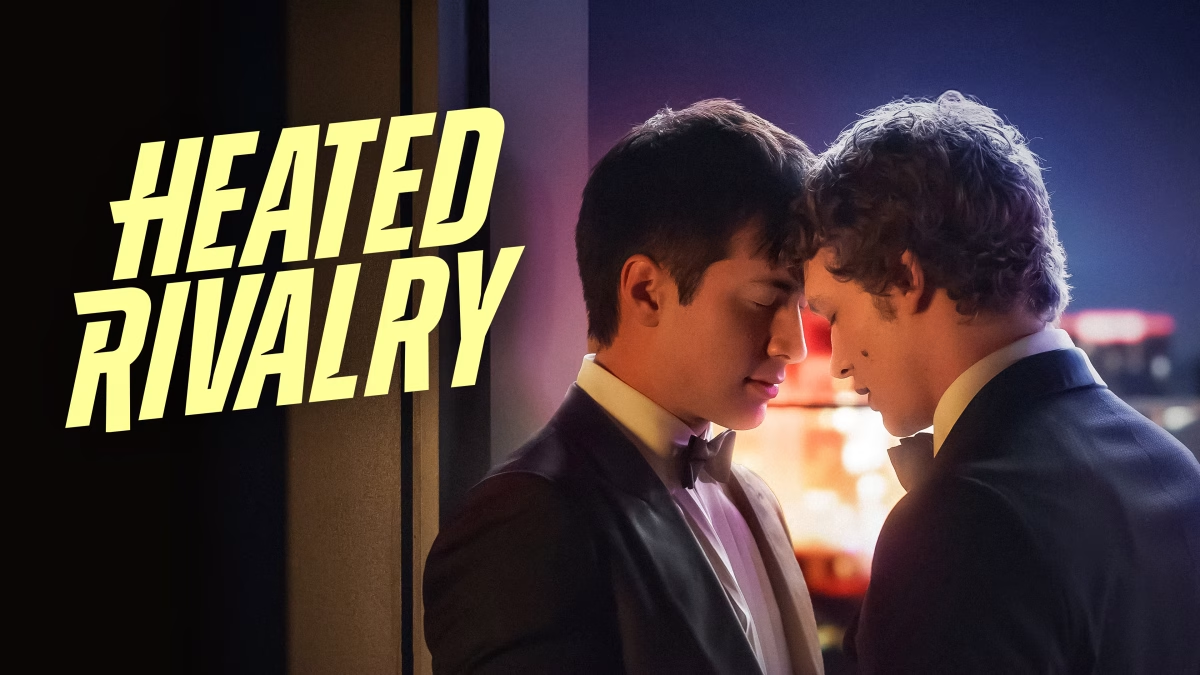
In recent years, gay romance novels have had a surge in popularity, with titles like “Heated Rivalry” becoming cultural sensations within the romance community. Not to say that there is anything wrong with gay romance novels like “Heated Rivalry;” the issue is, however, the fact that it seems to be representing a recent trend of the fetishization of gay, specifically male-male relationships.
While the book is often praised for increasing visibility of LGBTQ+ relationships in mainstream romance, its success also highlights a more uncomfortable reality of the fact that most of the market for these romances is driven by straight female readers, as well as being written largely by women.
The romance industry, in itself, is already predominantly female. Industry data estimates that 82% of romance readers are female, with only 18% being men. Because male-male exists within this larger market, it reflects much of the same demographics. As a result, many stories centered on gay men are written with the tastes and expectations of female readers in mind.
The popularity of “Heated Rivalry” demonstrates this dynamic clearly. The novel and following show on HBO Max has built a massive following through book communities and social media fandoms where female readers dominate discussion and promotion.
This dynamic has led to increasing criticism that male-male romance often fetishizes gay relationships rather than authentically representing them. Many novels in this genre portray idealized male characters whose relationships function primarily as romantic fantasy. Instead of exploring the lived realities of queer men, the focus is often placed on emotional intensity, sexual tension and the appeal of two attractive male characters together. In this sense, male-male relationships can become a kind of entertainment product shaped by what a straight female audience finds appealing.
It is important to realize that “Heated Rivalry” is not an isolated case, and the popularization of this novel and ensuing series has done a lot of good for those in the LGBTQ+ community, particularly athletes who struggle with similar things to those of the characters. The issue is the fact that much of the current male-male romance market is dominated by female authors, which makes the consumption uncomfortable. Popular books like “Heated Rivalry,” “Red, White and Royal Blue,” “Song of Achilles” and “Heartstopper” are all written by female authors.
While there are certainly queer male writers contributing to the genre, the most commercially successful books are frequently written by women and marketed primarily toward women. This imbalance raises questions about whose voices are actually being prioritized in stories that center gay male experiences.
Representation alone does not guarantee authenticity. When queer relationships are consistently packaged as fantasy narratives for an outside audience, they risk becoming objects of consumption rather than reflections of lived identity. If the goal is genuine representation, the genre must create more space for queer authors and perspectives, not just stories about them.
Lauren Douda is a sophomore English and secondary education major from Lexington, South Carolina. Lauren can be reached at [email protected].