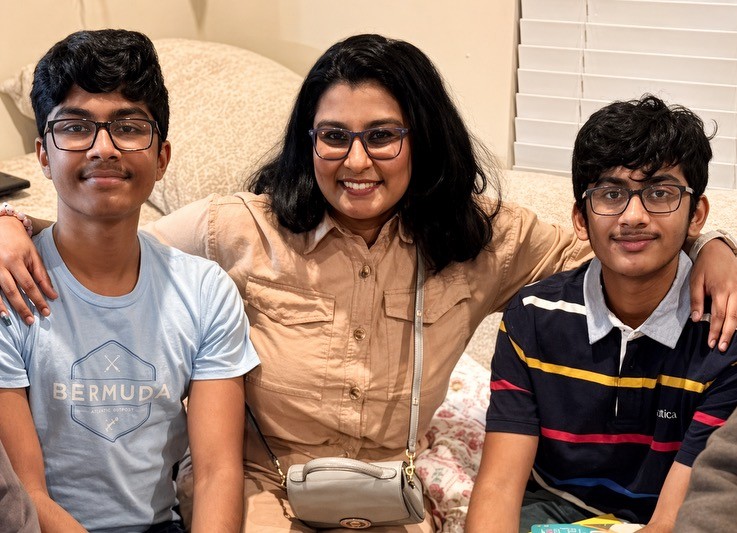


Attorney General of South Carolina Alan Wilson spoke at an invite-only event hosted by Clemson College Republicans on Nov. 6.
Wilson sought to share his life experiences with the room and discuss several policies he hopes to influence if elected governor.
Wilson has been the attorney general of South Carolina for 15 years, the longest-serving state attorney general in the country and the youngest to hold the position when he was sworn in at the age of 36. Wilson formally announced his candidacy for South Carolina governor on June 23, 2025.
Prior to his experience in government and law, he served in Iraq following his education at Francis Marion University. He was promoted to major and received the Combat Action Badge for his time in Iraq.
The most important thing he learned during his time in the National Guard about leadership was the importance of servitude.
“Don’t be afraid to surround yourself with people better than you,” Wilson said.
He graduated from the University of South Carolina School of Law in 2002 and began his legal career working for Judge Marc H. Westbrook. Wilson eventually became assistant solicitor and assistant attorney general.
Wilson also talked about one of his most influential experiences from his time serving as a prosecutor after graduating from law school. He told the story of a case in Spartanburg, South Carolina, of a young woman who had been sexually assaulted for years by a former cop.
After an eight-day trial and deliberation, the defendant was sentenced to 18 years in prison. After the sentencing, the woman began to cry and told him, “For the first time in my life, I’m not a victim.”
That unknowingly characterized his career as attorney general, years before he had the opportunity to run for the office.
“In that moment, it hit me like a lightning bolt … We were able to be a bridge from victimhood to survivorship,” Wilson continued.
When he was presented with the opportunity to run for attorney general, he thought back to that case. “I want to do, for as many victims and for as many people … at a global level, as I did for that one victim in that one case,” he said.
Wilson also engaged in discussions regarding early childhood education, income tax, infrastructure, government spending, immigration and campus carry.
Early childhood education
Wilson emphasized the importance of investing in children before they enter the first grade.
“If you wait ‘til the first grade, you waited too long,” he said, adding that he’s been a strong advocate for investing in reading, phonics programs, math and comprehension earlier in kindergarten, and making it universal in every school district.
Wilson also mused on the implications of subpar early childhood education and its inevitable effects on incarceration rates.
“So I tell folks all the time, you can look at third-grade test scores, and you can determine how many prisons you’re going to have to build 30, 40 years from now,” Wilson said.
Income tax
South Carolina currently has a progressive individual tax rate structure, meaning that the greater an individual’s income, the higher the income taxes they pay on the percentage of income above a certain threshold. The tax rates vary from 0% to 6%.
Wilson discussed his intentions to decrease this to 0% across the board. His primary reasoning for this is the appeal of living in a state with no income tax. Another anecdote he provided came from his experience visiting Scottsdale, Arizona, for a conference and speaking with a friend in the car.
He said that this friend’s favorite part of the country was the Southeast, so Wilson told him to move to South Carolina. The friend asked what the income tax rate was there, and Wilson responded with 6%. His friend said, “Call me when it’s 0%.” That friend was Charlie Kirk.
“That story reminds me of the need to do that because there are thousands of Charlie Kirks,” Wilson stated.
Wilson discussed the concern that many people have with a decreased income tax rate, which is the potential insufficiency of government revenues.
“37% of our state revenue comes from income taxes,” he said. “If you take that away, you’re losing a third — over a third — of all the money that funds government.”
Wilson believes that if state spending doesn’t grow every year, this portion of South Carolina’s revenue could be accounted for.
On the topic of income tax, a student inquired about the state’s “conservative identity” and whether it would be compromised by an influx of people moving in for the alleged tax benefits.
“I don’t know if a 0% income tax would be worth sacrificing our kind of conservative identity of the state,” the student said.
“Don’t California my South Carolina,” Wilson replied.
He explained that there are other factors at play, and it depends on the population and demographics of the people moving into the state.
Wilson added that he wants to create a culture that drives business and increases revenue without detracting from the state’s current politics.
Infrastructure
Wilson suggested the potential of creating toll roads to monetize “dead dirt,” which refers to land that the government owns but is not actively generating revenue from.
He proposed placing retail stores and restaurants on the first floors of government buildings, so that those buildings could generate property taxes. Finally, Wilson wants to lease easements on the sides of interstates and highways to generate money that could be utilized to improve infrastructure.
Government spending
“South Carolina is hemorrhaging money in state government … There’s a lot of inefficiencies baked into government,” Wilson said.
Wilson refers to the changes he would implement to prevent government waste in spending as “DOGE-ing government.” There’s the Office of the Inspector General, which Wilson describes as an auditing firm, since it essentially “goes out and finds fraud, waste and abuse.”
“Beefing this up,” Wilson said, could provide the office with the resources to monitor randomly across the state and thus deter fraud, waste and abuse of funds within government.
Immigration
Towards the end of the discussion, a student asked Wilson if he would be open to adopting a policy similar to the one in Florida, which prohibits higher education from hiring foreign workers with H-1B visas. H-1B visas allow U.S. employers to temporarily employ foreign workers in specialty occupations that require, at a minimum, a bachelor’s degree.
“That is an issue I don’t know enough about,” Wilson said regarding whether he could give his opinion on the topic. He clarified that he would like to have discussions with the Commission on Higher Education and speak with universities and colleges to determine if this is something he wants to pursue.
“Obviously, people who follow the law to come here on a temporary visa, do I want to punish them, if they’re here legally?” he asked.
Campus carry
A student asked Wilson about his perspective on campus carry, adding that they themselves were a “huge proponent of campus carry.”
Immediately after the question was posed, a law enforcement officer in the room offered his perspective on the matter.
“I’ve been here since April first, and I understand that all of y’all would be responsible with this, but most of the students can’t even lock their scooters.”
In response, Wilson said that he’s a “constitutional carry guy,” but that he recognizes there are two sides of the story when open carry is present in an “environment like this.”
“I’m certainly never going to be for the proposition that people shouldn’t be able to actively carry, but I also believe that organizations should have the right to govern themselves,” Wilson continued. “Private property owners should have the right to govern themselves.”