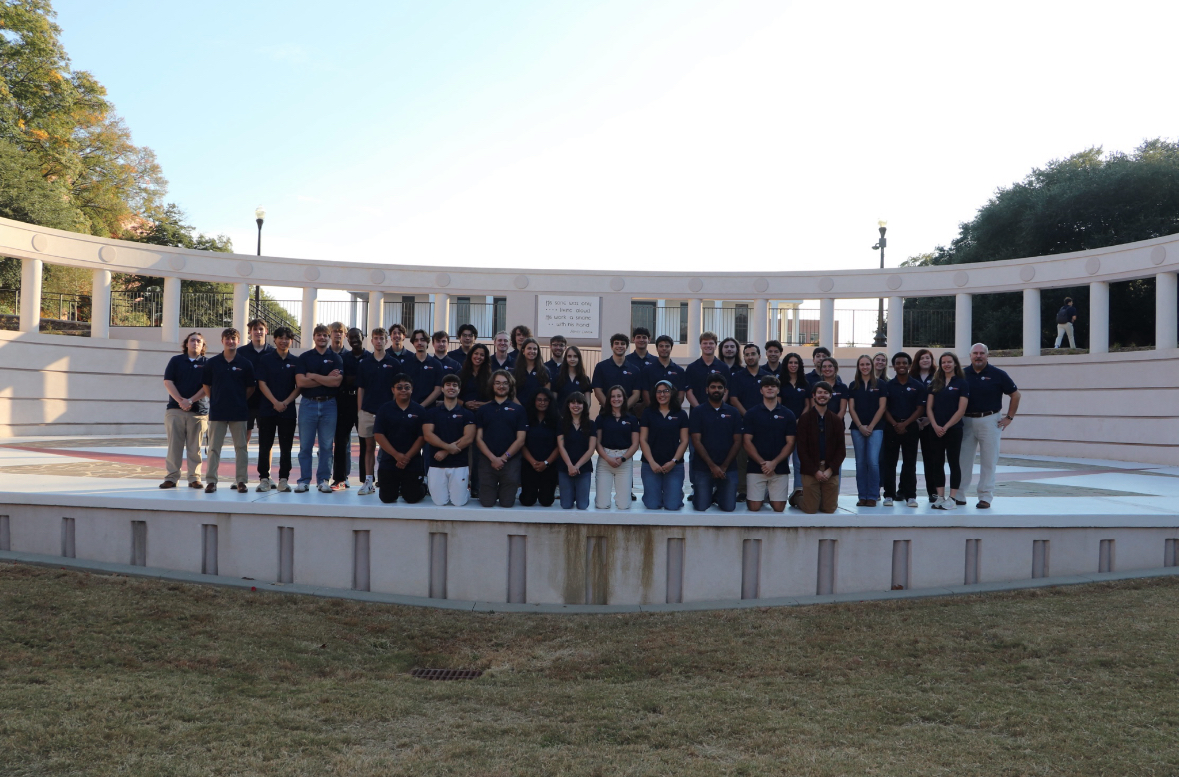
Many people want to make the world a better place, but CEDC is actually doing it. Clemson Engineers for Developing Communities is a student-led organization that promotes economic growth across local and global communities through project groups each semester. Each semester, students select from a range of projects that advance CEDC’s mission, “Serving the Developing World, Developing Those Who Serve,” and this semester, we selected eight projects to execute this:
Education vs. transportation
The goal of this project is to provide free e-bike transportation to Anderson residents pursuing industry certifications for skilled-labor jobs. Launched this past summer, the team is already working with Tri-County Technical College and the Catbus system to plan implementation. By improving access to education, we aim to reduce poverty and strengthen the Anderson community as a whole.
Cleo Bailey
The former schoolhouse in Anderson, known as Cleo Bailey, was recently purchased by local resident Zephaniah Smith, who hopes to turn it into a community center. The team supports Zephaniah by helping secure funding, connecting him with labor, and occasionally volunteering on-site. As Project Manager Andrew Streb explains, “This project provides a good sense of community… People want to get this community center built and have it there for their kids and their kids’ kids.” By providing this community center as a resource to the Anderson community, we hope to be able to provide food, basic education and resources to people in need of it and to help them form a place for themselves in society.
Homeless connectivity
This is a smaller project that is working on creating a pergola in Cleo Bailey. While only launched in the summer of 2025, the pergola is already being built by the hands of our students. This project focuses on raising money, designing and implementing the Cleo Bailey pergola, in hopes of providing homeless people with outlets to charge their devices. By doing this, we strive to connect them with the ability to apply for work or to effectively communicate with people who may be able to help them.
Owners vs. renters
A local volunteer organization in Anderson found that some renters are living in poor conditions with landlords who are either unaware or unwilling to help. Because the situation is so complex, the group is exploring multiple starting points — pressuring landlords to make improvements, securing funding to support tenants directly, or forming a coalition of NGOs to help subsidize housing. Our aim is to fix these extractive situations and make low-income housing more livable.
Colombia Ramp Pump
Beyond South Carolina, CEDC students also apply their skills internationally through projects in Colombia and Ecuador. The Colombia Ramp Pump is an international project focused on helping farmers in Colombia move water from lower to higher elevations. The pump has already been designed, and this semester the team is creating a handbook so farmers can build it themselves, allowing them to transport water more easily and spend more time harvesting. The goal is to make the design accessible to non-engineers and provide a resource farmers can use whenever needed. The project is expected to launch within the next few semesters.
Disaster housing planning
This team is tackling the gap between temporary and permanent housing after natural disasters. By reviewing state resilience plans, FEMA guidance and research, they’re identifying funding options, policy barriers and practical solutions. Led by Vanessa Rodriguez, the team is partnering with SCOR, FEMA Region 4 and local governments to develop scalable housing strategies for vulnerable communities.
“If we can bridge the gap between policy and real-world implementation, we can help families recover faster and return home stronger,” Vanessa says.
This fast-moving project is quickly becoming one of our strongest efforts, and when complete, we will have successfully created plans for post-disaster temporary living until the affected groups are able to get back on their feet.
Mandari Panga: Water system
Down in Ecuador, in a small region of the Amazon Rainforest, lives the Mandari Panga, with whom we have been connected to for years. In this region, families have little access, if any, to clean water, and children are skipping school to fetch water for their families. After recognizing this, we have been working with locals to build a water system within the community, and after multiple years of working on this project, it will be implemented over spring break! It is an incredible process to watch undergraduate engineering students get the chance to design something, gaining experience while acting in a humanitarian way, and we are thrilled to have the launch of our project next semester. Once implemented, these communities will have more access to clean water, and children’s education rates will be able to increase.
Mandari Panga: Sanitization
While the water system in the Mandari Panga is almost completed, the sanitization project is just starting out. Our goal for this project is to build a latrine so that people in this region have a way to clean themselves. While currently in the phase of researching sustainable and long-lasting latrines, we are looking for engineering majors who want to help in the design process for the upcoming semesters! When complete, this sanitation project will be able to provide easy access to clean bathing, and children will once again be able to focus on going to school and eventually further developing their own economy.
So why should you care?
Together, our projects give participating students hands-on experience in humanitarian engineering, project implementation and real volunteering that builds leadership, empathy and professional skill.
We have Anderson projects that will grow the local community by providing resources to people who may be lacking in them. By helping people with transportation, homes and a community center, we are giving people access to resources that they need in order to thrive in a workplace or to further their education.
It is worth noting that none of this is being done alone. Education vs. Transportation and Owners vs. Renters are working with Hope Missions of the Upstate in Anderson. By working with the people of Anderson to figure out what they need — so that we are not just providing unwanted help — we are able to effectively give back to our communities, which is what our organization is all about.
While communication with our international projects is less convenient, we are using the same methods of working with locals to develop technology and products they desire. By providing sanitization and water to the Mandari Panga, our goal is to increase education amongst youth. Instead of worrying about services to keep themselves alive, children can worry about their grades and what games to play at recess, which is what childhood should be about. By increasing this education, the economy will grow. People will be able to make their own innovations.
We also have a variety of different majors on these projects, which partially helps to prevent groupthink in collaborative work. Mainly, we view an engineer as a problem solver, not just someone good at math or who’s working on a degree. From classroom to community, CEDC is actively turning ideas and data into practical solutions that improve lives locally and globally. Program leader David Vaughn notes, “This hands-on approach not only fulfills Clemson Elevate’s mission of experiential learning but also prepares students to lead with purpose long after graduation.”
And of course, we are always recruiting passionate and disciplined students from any major. If this sounds like you, always feel free to reach out to @cu_cedc on Instagram or register for ECAS-1900. Go Tigers!