
On March 16, the White House announced the state winners of the Presidential AI Challenge, which included a team mentored by a Clemson University student.
The winning team in the Track 1 South Carolina High School division consisted of two high school students and was led by Preethika Yetukuri, an honors senior mathematics major at Clemson. Her team advanced to compete at the regional level before concluding their run in the competition.
The Presidential AI Challenge was announced by President Donald Trump and First Lady Melania Trump in December 2025. The challenge invites students in grades K-12 to participate in a project that uses artificial intelligence to address a community challenge.
Some of the goals of the challenge include integrating AI knowledge into school systems and motivating students to propose solutions and explore their interest in AI.
“Early training in the responsible use of AI tools will demystify this technology and prepare America’s students to be confident participants in the AI-assisted workforce,” the White House wrote.
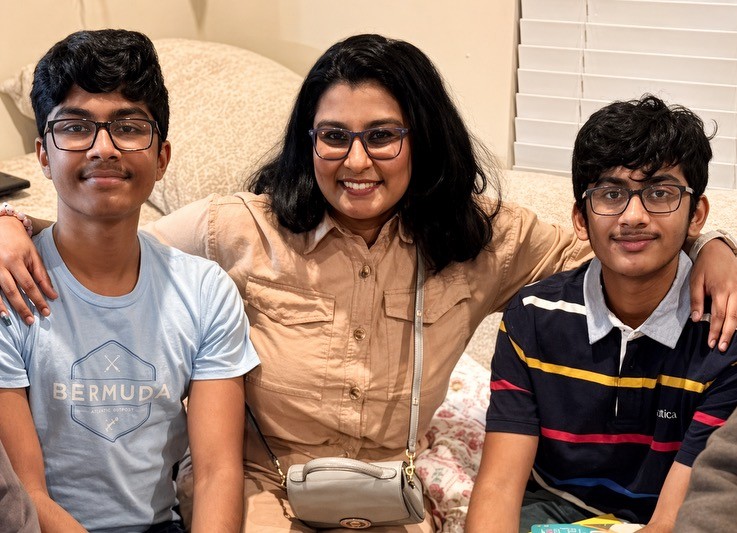
Preethika, who found the challenge in a LinkedIn post, mentored her brother, Pradhyun Yetukuri, and cousin, Jai Mihir Penumadula, both high school sophomores. They chose to address excess food waste in school cafeterias.
Their submission, titled “The Community Plate Project,” was an idea that Yetukuri came up with after witnessing bins of waste that contained as much food as whole pizzas. She believed the food could have been saved for homeless shelters or communities in need.
The team was also inspired by the United Nations Sustainable Development Goals, a list of 17 objectives established in 2015 as part of the 2030 Agenda for Sustainable Development.
The team’s project targets three main goals: reducing overproduction before waste occurs, understanding why waste occurs and how meals can improve and lastly, reducing waste while improving nutrition and community benefit.
Rather than replacing human assessment, AI will provide vital data and insights to school administration, cafeteria staff, and students, the team claims.
Yetukuri told The Tiger in an interview that the project proposes that AI can track both food preferences and student attendance.
The students’ proposed design serves as a “smart cafeteria system” and seeks to understand student demand, identify causes of waste, explore potential strategies to maintain food surplus and find safe redistribution options.
To put together their project and prepare for presentations, the three team members worked over the phone through numerous video chats.
“Process-wise, we had to do a lot of research,” Yetukuri said. “I made them do a literature review for the first time.”
She didn’t just facilitate steps like research and presentation building for the sake of the project, but also to prepare her younger brother and cousin for college and their future careers.
Yetukuri also supported them with training in skills such as the interview process. The two boys spoke via Zoom with panel members from AI- and social media-based companies, including NVIDIA.
Out of over 2,500 submissions, the team was one of 328 state-level winners across the US.
Yetukuri feels she has always been called to education. She worked as an academic grader and tutor for Best Brains and enjoyed her time working with children.
“I would always go the extra mile to … provide … written feedback on their books,” said Yetukuri.
Yetukuri brings her passions for innovation, education and policy to Clemson’s honors college, a creative inquiry called Tech Policy Thinkers and her Ignite fellowship with Teach For America.
Reflecting on her time here, Yetukuri is glad she has pursued opportunities at Clemson and encourages others to do the same.